Heathrow is not your average airport. It is one of the busiest in the world, and if you have never flown from it before, the size alone can catch you off guard.
Turning up with two hours to spare works perfectly well at smaller regional airports. At Heathrow, that same two hours can disappear quickly if you are not prepared. The wrong terminal, a long security queue, or a slow bag drop can eat through your buffer before you have even thought about finding your gate.
This guide tells you exactly how early to arrive at Heathrow, what to expect at each stage, and how to make the whole journey smoother, whether you are flying to Glasgow or getting on a plane to New York.
The Short Answer
Most airlines and airport guidance recommends the following as a baseline:
- Short-haul and European flights: Arrive at least 2 hours before departure
- Long-haul and international flights: Arrive at least 3 hours before departure
- Peak travel periods, school holidays, or major events: Add at least 30 to 45 minutes on top
These are minimum arrival times at the airport itself, meaning you need to factor in your journey to Heathrow separately. A common mistake travellers make is confusing “leave home 3 hours before” with “arrive at Heathrow 3 hours before.” They are very different things, and mixing them up is how people miss flights.
What Makes Heathrow Different
Heathrow handles over 80 million passengers a year. It is the second busiest airport in Europe and one of the largest international hubs anywhere in the world. Unlike a smaller airport where everything is in one building and security takes ten minutes on a bad day, Heathrow is spread across four operating terminals, each serving different airlines.
That scale brings real complexity. Your terminal matters. The distance to your gate matters. The time you choose to fly matters more here than almost anywhere else in the UK.
Here is the current terminal layout in 2026:
- Terminal 2 handles most Star Alliance airlines. This includes United Airlines, Lufthansa, Air Canada, Singapore Airlines, and others. It is located in the central area of the airport and shares a station with Terminal 3.
- Terminal 3 is home to a mix of long-haul carriers including Virgin Atlantic, Delta, and some British Airways services on transatlantic routes.
- Terminal 4 serves a range of international airlines including Qatar Airways and KLM. It sits in a separate location from Terminals 2, 3, and 5, with its own dedicated road access and rail stop.
- Terminal 5 is used exclusively by British Airways and Iberia. Almost all BA flights depart from here. It is one of the busiest single-terminal buildings in the world.
Knowing your terminal before you leave home is not optional. If you arrive at the wrong one, the process of getting to the right terminal takes 20 to 30 minutes, and that time comes directly out of your buffer.
Always check your ticket or booking confirmation the night before you fly. Your terminal is printed there, and it is worth double-checking even if you have flown from Heathrow before, because airlines occasionally change terminals.
The Five Stages Between Arriving and Boarding
Most people think airport timing is just about security. At Heathrow, there are actually five distinct stages between stepping out of your car or train and sitting at your gate. Each one takes time.
Stage 1: Getting to the Right Terminal
Heathrow has its own Underground station on the Piccadilly line, serving Terminals 2, 3, and 5 directly. Terminal 4 has its own stop on the same line, a short ride further. The Heathrow Express from London Paddington stops at Terminals 2 and 3, with a connecting train to Terminal 5.
If you are being dropped off by car, allow time for the drop-off zone process. Since January 2026, the terminal drop-off charge at Heathrow is £7 per visit, with a strict 10-minute maximum stay in the drop-off zones. The charge is captured automatically by ANPR cameras. You pay online or by phone before midnight the following day. Ignore it and you receive an £80 fine.
You cannot pay at a machine at the airport. You cannot pay at a barrier. The system is entirely digital. If someone is dropping you off, make sure they know this before they arrive.
If you want to avoid the drop-off charge entirely, the Long Stay car parks offer free drop-off for up to 30 minutes. A free shuttle bus then runs to the terminals every 15 minutes. This is perfectly fine, but it adds time. Factor in at least 20 to 25 minutes extra if you go this route.
Allow 10 to 20 minutes for this stage once you are at the airport, depending on how you arrive and which terminal you need.
Stage 2: Finding Check-In and Completing Bag Drop
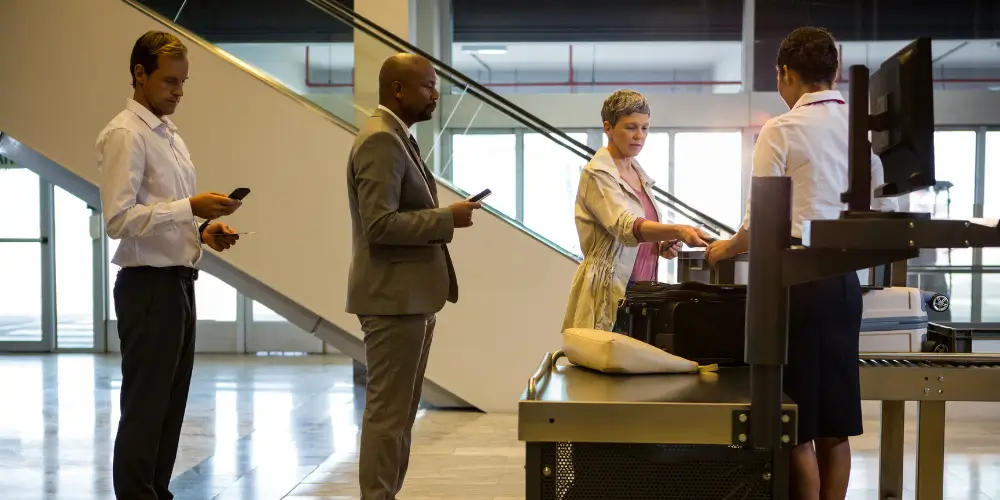
At Heathrow, check-in areas are organised by airline within each terminal. Most passengers check in online before they arrive, which is strongly recommended. It allows you to head straight to bag drop rather than joining a full check-in queue.
British Airways closes check-in 60 minutes before long-haul flights depart and 45 minutes before short-haul departures. These are hard cutoffs. Arriving at the desk after these times means you do not fly.
Most other airlines at Heathrow operate similar closing times: 60 minutes before long-haul, 45 to 60 minutes before short-haul. Always check your specific airline’s rules before you travel because they differ.
The average bag drop queue at Heathrow takes around 45 minutes during busy periods. That number is important. It means you need to be at the bag drop desk 90 to 105 minutes before your departure, just to get through bag drop in time. Security comes after that.
Allow 20 to 50 minutes for check-in and bag drop depending on the time of day and how busy the terminal is.
Stage 3: Security
This is the longest and most unpredictable part of the process at Heathrow.
The average security wait time at Heathrow is around 37 minutes. During peak hours from 5am to 8am and again from 4pm to 7pm, that average climbs to 56 minutes or more. Off-peak, typically mid-morning to early afternoon, the average drops to around 22 minutes.
Each terminal has its own security setup and its own characteristics:
- Terminal 5, used by British Airways, generally runs efficiently but can build up fast during early morning long-haul departures. Expect 30 to 45 minutes at peak times.
- Terminal 2 can be busiest in the morning when multiple Star Alliance European flights depart in a short window.
- Terminal 3 sees afternoon peaks driven by transatlantic long-haul carriers.
- Terminal 4 tends to have moderate waits, but the separate location means queues can be harder to predict.
The good news is that Heathrow has completed the rollout of new CT scanning technology at Terminal 5, meaning you no longer need to remove laptops or liquids from your bag at those lanes. Terminal 4 may still operate older lanes where the 100ml liquid rule applies. Always check before you travel.
After clearing security, Heathrow is large enough that walking to your gate can take another 10 to 20 minutes depending on where you are in the terminal. Gates close 20 minutes before departure.
Allow 40 to 65 minutes for security and the walk to your gate.
Stage 4: Passport Control for International Arrivals
This stage applies when you land at Heathrow, not when you depart. But if you are flying internationally and have a connecting flight at Heathrow, this is relevant.
Arriving passengers at Heathrow must clear passport control before collecting bags and exiting. UK and Irish citizens can use e-Gates, which are fast automated passport barriers. Eligible overseas biometric passport holders from certain countries can also use e-Gates, which significantly speeds up the process.
Immigration processing currently averages around 22 minutes, but during peak arrival waves it can be 40 minutes or more. For international arrivals, the full process from landing to walking out of arrivals, including baggage reclaim, takes around 40 minutes in normal conditions and up to an hour or more when it is busy.
Stage 5: Connecting Flights
If you are connecting at Heathrow, the timing rules change considerably. Heathrow’s minimum connect time, which is the shortest gap Heathrow itself recommends between arriving and departing, is around 60 minutes for connections within the same terminal. Connecting between terminals requires 90 minutes minimum, and for international to international connections with customs, allow at least 2 hours.
If your connecting time is tighter than these figures and something goes wrong with your inbound flight, you may miss your connection. Book connections through your airline so they take responsibility for rebooking if a delay causes a missed connection.
How Early to Arrive: Broken Down by Flight Type
Flying to Europe (Spain, Portugal, France, Italy, Greece, and Similar)
Arrive 2 hours 30 minutes before departure on a normal day.
Arrive 3 hours before if you are travelling in July, August, or December, during school holidays, on bank holiday weekends, or on any morning flight before 9am.
Here is roughly how that 2 hours 30 minutes is used:
- 15 minutes to reach and navigate to check-in
- 30 minutes for bag drop
- 37 minutes for security (average day)
- 18 minutes to walk to the gate
- 10 minutes of buffer
If security runs slowly, you eat into the buffer. If it is a quiet Wednesday afternoon, you have comfortable time to sit down before boarding.
Flying Long-Haul (Dubai, USA, Canada, Asia, Australia, and Beyond)
Arrive 3 hours before departure.
Arrive 3 hours 30 minutes before during July, August, and December.
Long-haul check-in takes longer. Passport control adds a separate step. For US-bound flights, additional document checks at the gate mean you need to be there earlier than for other destinations. British Airways closes long-haul check-in 60 minutes before departure, leaving very little margin if you arrive late to the desk.
For flights to the United States, check whether your flight requires ESTA or visa pre-authorisation. These must be completed before you arrive at the airport, not at check-in.
Flying Domestic UK (Edinburgh, Glasgow, Manchester, Belfast, and Others)
Arrive 2 hours before departure.
You do not need passport control for domestic travel. But you still go through exactly the same security lanes as every other passenger in your terminal. Heathrow security does not distinguish between a domestic flight to Edinburgh and a long-haul flight to Singapore. Two hours is the safe choice, even for a short domestic hop.
Travelling With Young Children
Add 20 to 30 minutes to whatever timing applies to your flight type.
Heathrow is a large and complex airport, and navigating it with children takes longer than it does alone. Pushchairs need to be folded and sent through the security scanner separately. Children’s liquids and food are allowed through security but require a separate check. The satellite concourses at Terminal 5 involve an underground transit ride, which takes a few minutes. The long corridors throughout Heathrow’s terminals are tiring for small children.
None of this is a problem if you have allowed enough time. It becomes a problem when you have not.
Travelling With a Disability or Reduced Mobility
Contact your airline and Heathrow’s Special Assistance team in advance of your travel day. Pre-booking assistance at Heathrow is important because the airport is large enough that navigating it without help can be very difficult. The assistance service at Heathrow is good, but it works best when it is arranged before you arrive, not requested on the day.
Arrive earlier than the standard guidance for your flight type and let the assistance desk know you are there as soon as you enter the terminal.
When Is Heathrow at Its Busiest?
Understanding when Heathrow is most congested helps you plan around the worst of it.
The busiest times for security are 6am to 9am and 4pm to 7pm. Midday flights from 11am to 2pm generally move through security more quickly than early morning or evening departures.
Friday afternoons and Sunday evenings are the most congested times of the week across the whole airport. Tuesdays and Wednesdays are noticeably quieter.
The peak months are July, August, and December. Christmas, Easter, and the May bank holiday weekend are also exceptionally busy, and the standard arrival guidance may not be enough on those specific days.
If you are flying during a peak period, treat the extended timing as the default and plan accordingly.
How to Get to Heathrow
Getting your transport to the airport right is just as important as knowing what to do once you are there. The M25 and M4, the two main roads leading to Heathrow, can be seriously congested during rush hours. Journey times by road from central London or the Midlands can vary by 30 to 45 minutes depending on the day and time.
There are several ways to reach the airport.
Heathrow Express runs from London Paddington and takes 15 minutes to Terminals 2 and 3, or 21 minutes to Terminal 5. It is fast but expensive, currently around £25 each way for a standard ticket. If you book online in advance you can get better prices.
Elizabeth Line is slower than the Express but significantly cheaper, and the journey from central London takes around 30 to 40 minutes. It serves Terminals 2, 3, and 4 with connections to Terminal 5. It is a good option for passengers without excessive luggage.
Piccadilly Line is the most affordable option but also the slowest, taking around 50 minutes from central London. It serves all terminals. On a quiet day it is perfectly fine. On a packed Monday morning with two large suitcases, it is harder work.
Driving yourself is an option if you need parking for several days. Heathrow’s own parking is expensive. Short-stay parking near the terminals costs around £8 for 30 minutes. If you need parking for a full week, pre-booking long-stay parking well in advance brings the cost down considerably, though you still need a shuttle bus from the car park to your terminal.
Professional chauffeur transfer to Heathrow is the option that removes all variables from the journey. A professional chauffeur service from Birmingham to Heathrow monitors live traffic, plans the departure time to get you there with the right amount of buffer, and drops you directly at your terminal entrance. There is no parking to arrange, no shuttle bus, no rush hour gamble, and no £7 drop-off charge to navigate.
For business travellers, families, or anyone flying long-haul, a professional airport transfer to Heathrow means the journey starts calmly rather than under pressure. When you are about to spend ten hours on a plane, starting the day relaxed genuinely matters.
Collecting Someone From Heathrow
If you are collecting an arriving passenger, the timing calculation is different.
For international arrivals, the full process from landing to walking out of the arrivals hall typically takes 40 to 60 minutes. This includes taxiing to the gate, walking through the terminal, passport control, and baggage reclaim. During busy periods it can take longer.
For domestic arrivals, the process is quicker because there is no passport control, but allow at least 20 to 30 minutes from landing time before you expect to see your passenger.
Picking up directly from the terminal is not straightforward. There is no free waiting at the terminal forecourts. Pick-up from the terminal forecourts is banned and unattended vehicles will be moved. Drivers who need to wait can use Terminal Parking at around £8 for 30 minutes, or the Park and Ride long-stay option which is free for up to 29 minutes with a free shuttle.
If you have booked a meet and greet transfer at Heathrow, your driver tracks the flight in real time and arrives at the terminal at the right moment. You do not pay for waiting time caused by a delayed flight, and your passenger does not spend ten minutes searching for their car in the cold outside arrivals.
Practical Tips for a Smoother Departure
A few simple things make a real difference when flying from Heathrow.
- Check in online before you leave home. Every major airline at Heathrow supports mobile boarding passes. Online check-in lets you go straight to bag drop, skipping the check-in queue entirely.
- Know your terminal before you leave. Look at your ticket or check the airline’s website the evening before your flight. Arriving at the wrong terminal at Heathrow is a 25-minute problem you do not want.
- Check live security wait times. The Heathrow website and app show real-time security queue information by terminal. If your terminal is showing an unusually long wait, you know to account for that before leaving home.
- Be ready for security. Even with CT scanners at Terminal 5 removing the need to unpack liquids, the security tray process still takes time if you are not organised. Phones, laptops, and belts in your bag before you reach the tray.
- Know the drop-off charge rules. If a friend or family member is dropping you off, make sure they are aware of the £7 charge and the 10-minute maximum stay. Payment must be made online before midnight the next day.
- Allow extra time for Terminal 4. Terminal 4 sits in a separate location from the other terminals and has its own access road. If you are flying from Terminal 4, factor in a few extra minutes at every stage.
Timing Tips for Peak Periods
Summer Holidays (July to August)
This is the busiest period at Heathrow. Add at least 45 minutes to your normal arrival time. Security queues are longer, bag drop desks are busier, and the terminals are at their most crowded. If you have a 7am flight, you realistically need to be at the airport by 4.30am or 4.45am.
Christmas and New Year
The period from 20 December to 3 January is exceptionally busy. Check-in desks handle higher volumes of checked baggage as people travel with gifts and longer-stay luggage. Aim for 3.5 hours before departure for any international flight during this window.
School Half-Terms
February, May, and October half-term weeks see a notable increase in family travel. Families travelling with children typically take longer at each stage, so queues back up. These are good weeks to add an extra 30 minutes.
Business Travel Peaks
Monday mornings, particularly from 6am to 9am, and Thursday and Friday evenings from 4pm to 7pm are dominated by business travellers. Bag drop and security can be fast for frequent flyers who travel light, but overall volumes are high. Premium lane access through airline status or business class tickets makes a meaningful difference during these windows.
What to Do If Your Flight Is Delayed or You Are Running Late
If you know you are going to be late, contact your airline as soon as possible. Do not wait until you arrive at the airport. For long-haul flights especially, the check-in and security process takes longer, and airlines have less flexibility to accommodate late arrivals than on shorter routes.
If your outbound flight is delayed, Heathrow has plenty of ways to pass the time in the departure lounge. There is free Wi-Fi across the entire airport. Restaurants, shops, and lounges are available in every terminal. If you have time before your flight, our Heathrow airport lounges guide breaks down prices and access options for every terminal.
If your inbound connection is delayed, let the airline know you have a connecting flight. They may hold your onward flight if enough passengers are on the same connection, or rebook you automatically.
Arrival Times at a Glance
Here is a simple reference you can save.
| Flight Type | Normal Day | Busy Period |
|---|---|---|
| Short-haul European | 2 hours | 2 hours 30 minutes |
| Long-haul international | 3 hours | 3 hours 30 minutes |
| Domestic UK | 90 minutes | 2 hours |
| Families with children | Add 30 minutes | Add 30 minutes |
| Connecting flights | Min 90 minutes (same terminal) | Min 2 hours (between terminals) |
These are arrival times at your terminal, not departure times from home. Add your travel time to Heathrow, including any shuttle bus time from long-stay parking, on top of these figures.
Conclusion
Knowing how early to arrive at Heathrow Airport can make the difference between a relaxed start to your journey and a stressful rush through the terminal. While two hours is usually enough for domestic and short-haul flights, most international and long-haul travellers should allow at least three hours before departure. During school holidays, peak travel periods, or if you’re travelling with children or checked luggage, giving yourself some extra time is always a sensible choice.
The key is not just arriving at the airport on time, but planning your journey to Heathrow properly. Traffic delays, public transport disruptions, and terminal confusion can quickly eat into your schedule. A little preparation goes a long way towards a smoother travel experience.
Need a Reliable Heathrow Airport Transfer?
Avoid the stress of parking, train delays, and last-minute taxi searches. National Executive Transfers provides professional Heathrow airport chauffeur services with fixed pricing, flight monitoring, and punctual door-to-terminal transfers across the UK.
Book your Heathrow chauffeur today and start your journey with complete peace of mind.
Frequently Asked Questions
Two hours before departure on a normal day. During school holidays, summer, Christmas, or any departure before 9am on a weekday, make it two and a half hours.
Three hours before departure. For flights to the US, Asia, or Australia during July, August, or December, give yourself three and a half hours. British Airways closes long-haul check-in 60 minutes before departure, so there is no room to cut it fine.
Yes, for most short-haul European flights on a normal day. It is tight during peak periods or school holidays, when 2.5 hours is safer.
The average is around 37 minutes. During peak hours from 6am to 9am and 4pm to 7pm, it can be 56 minutes or more. Off-peak in the middle of the day, it is closer to 22 minutes.
Yes. Fast Track passes can be bought in advance or come included with some premium tickets, lounge access, or airline status. They use a separate, shorter security lane.
At Terminal 5, CT scanners are now in full use and you no longer need to remove liquids from your bag. At Terminal 4, older lanes may still require the 100ml rule. Check the Heathrow website for your specific terminal before you travel.
British Airways closes check-in 60 minutes before long-haul departures and 45 minutes before short-haul. Most other airlines at Heathrow follow similar timelines of 45 to 60 minutes before departure. Always check with your specific airline.
Most airlines open check-in and bag drop 3 hours before departure, with some long-haul carriers opening up to 4 hours before. This varies by airline, so check your booking confirmation.
Fridays and Sundays see the heaviest passenger volumes, along with the start and end of school holidays. Tuesdays and Wednesdays are typically the quietest.
Not really. Most terminals have shops, lounges, and restaurants open well before the busiest hours, so arriving early simply means more time to relax rather than time wasted.
Since January 2026, the charge is £7 per visit to the terminal drop-off zones, with a 10-minute maximum stay. Payment must be made online or by phone before midnight the following day. Failure to pay results in an £80 fine. The charge applies to all vehicles, including private cars, taxis, and private hire vehicles.
Terminal 2 is mostly Star Alliance airlines. Terminal 3 handles Virgin Atlantic and several long-haul carriers. Terminal 4 serves Qatar Airways, KLM, and others. Terminal 5 is exclusively British Airways and Iberia. Always confirm your terminal on your ticket or the airline's website before you travel.
The Heathrow Express from Paddington takes 15 minutes to Terminals 2 and 3, for around £25. The Elizabeth line takes 30 to 40 minutes and is considerably cheaper. The Piccadilly line takes around 50 minutes.
No. Picking up directly from the terminal forecourt is not permitted. Drivers must use Terminal Parking at around £8 for 30 minutes, or the free Long Stay Park and Ride option with a shuttle bus. Professional chauffeur and transfer services use designated vehicle areas and handle this on your behalf.