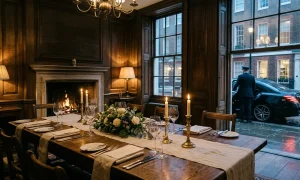
You don’t need a Business Class boarding pass to spend your pre-flight wait somewhere better than a plastic seat by the gate. Economy passengers can walk into a UK airport lounge today, on almost any ticket, through several different routes.
Not every route offers good value. Some make sense once a year. Others only pay off if you’re flying every month. Get the wrong one, and you’ve bought a membership you’ll barely use, or paid twice for something a card in your wallet already covers.
This guide sorts out the real options, what they cost, and how to work out which one fits how you actually fly.
Why lounge access stopped being a Business Class perk
Airport lounges used to work on a simple rule. Premium ticket, lounge access. Economy ticket, the departure hall.
That rule has broken down over the past decade. Independent lounge operators built businesses around selling access to anyone willing to pay, regardless of cabin class. Priority Pass built a membership model around exactly that same gap.
Banks noticed the demand too. Several premium current accounts and credit cards now bundle lounge access as a standard benefit, sometimes for the cardholder and a guest. That’s turned lounge entry into something a fair few Economy travellers already have, without knowing it.
More choice doesn’t automatically mean better value
More routes into a lounge sounds like good news, and mostly it is. It also creates more ways to overpay for something you didn’t need, or under-use something already sitting in your wallet.
Take someone who signs up for an annual Priority Pass membership after one stressful airport wait, then flies twice more that year. They’d likely have spent less buying two separate day passes instead.
This guide works through the real paths in, one at a time, and explains where each one earns its cost.
What are the actual ways to get into a lounge?
There are five practical routes into a UK airport lounge without a premium boarding pass. Each suits a different travel pattern.
Buy a single lounge pass
This is the simplest option. You pay for one visit, usually booked online in advance, and walk in on the day.
Who it suits: anyone flying once or twice a year who doesn’t want an ongoing membership. Families booking a single summer holiday fall into this group often.
Advantages: no commitment, easy price comparison before booking, and you only pay for the trip you’re taking.
Disadvantages: it’s the most expensive way in per visit if you fly more than a few times a year. Popular lounges also sell out during school holidays and early mornings.
Typical UK price range: a single day pass commonly runs somewhere between £25 and £45 per person at a regional airport, and higher at busier London terminals. Prices vary by lounge, date, and how far ahead you book. Treat this as a general steer rather than a fixed figure.
A couple flying once a year for a fortnight abroad might spend £70 to £80 on two day passes. Compare that to an annual Priority Pass membership, which often costs more than that before either of them has even used it once.
Priority Pass
Priority Pass works as an annual membership, giving access to a network of lounges across the UK and internationally, rather than paying per visit.
How it works: you pay an annual fee first. Depending on the tier you choose, you then either get a set number of free visits included, or pay a per-visit rate on top.
Who benefits: frequent flyers, especially anyone travelling for work several times a year. Families flying more than three or four times annually benefit too, since they’d otherwise pay full price on every trip.
Visit limits and guest charges: entry-level tiers typically include a handful of free visits before a per-visit charge kicks in. Bringing a guest usually costs extra, even on higher tiers. Check the current terms directly before assuming your plan covers a partner or child for free.
Why occasional travellers may not benefit: fly once a year, and the annual fee alone can cost more than simply buying a single day pass would have. Priority Pass earns its keep through frequency, not through the promise of access alone.
Bank and credit card benefits
A number of premium credit cards and bank accounts already include lounge access, and plenty of cardholders never use it.
What to check on your existing cards: whether lounge access is included at all, and how many visits per year. Check whether it covers a guest, and whether it runs through Priority Pass or a separate scheme entirely.
Annual fees: these cards typically carry a fee of their own, so the lounge benefit needs weighing against that cost, not treated as free.
Guest restrictions: some cards cover the holder only. Others extend to one guest, and a few charge extra even for an included guest. Assuming your card’s terms match a friend’s is a common mistake.
Check this before paying for anything else. It costs nothing to look at your existing card’s benefits booklet. This is the single most common source of wasted lounge spend: paying separately for something already sitting unused in your wallet.
LoungeKey and similar networks
LoungeKey operates much like Priority Pass, as a network of participating lounges accessed through a membership or an eligible card.
Coverage between LoungeKey and Priority Pass isn’t identical. Some lounges accept one but not the other, and some accept both. Check which network actually covers your preferred lounge, rather than assuming either scheme guarantees entry everywhere.
Several banks issue LoungeKey access as a card benefit rather than a standalone paid membership. That’s exactly why checking your existing cards matters before signing up for anything new.
Book directly with the lounge
Many independent lounges take direct bookings through their own website, separate from any membership scheme.
This route suits someone who knows exactly which lounge they want, on a set date. They’d rather book a guaranteed slot than rely on membership capacity that can fill up during busy periods.
Direct booking sometimes works out marginally cheaper than a Priority Pass per-visit rate, particularly during a promotional period. A quick price comparison beats defaulting to whichever membership you already hold.
Bundled airport packages
Some airports and travel companies sell bundles combining Fast Track security, lounge access, and sometimes a Meet & Greet or concierge element, all in one booking.
When bundling makes sense: if you’d have booked Fast Track and a lounge separately anyway, a genuine bundle discount is worth taking. It also simplifies a group booking, since everyone’s sorted through one transaction.
When it doesn’t: if you only wanted the lounge and have no interest in Fast Track, paying for a bundle just to reach the lounge portion rarely makes sense. Check the individual component prices before assuming the bundle is automatically cheaper.
A note on Meet & Greet bundles specifically
Some bundles pair lounge access with a Meet & Greet service rather than Fast Track. That combination suits a different traveller: someone who wants help with bags and a smoother terminal entry, not just a faster security queue.
Weigh up whether you’d genuinely use both parts separately. A Meet & Greet service booked on its own, alongside a standalone lounge pass, sometimes costs less than the combined package, depending on the specific operator’s pricing that week.
Which option is cheapest for how you actually travel?
Cheapest depends entirely on how often you fly, not on which option looks best sitting on its own. Here’s how that breaks down by travel pattern.
One flight per year: a single day pass almost always beats any membership. You pay once for the one trip you’re taking, with nothing left unused at the end of the year.
Two to three flights per year: this sits right on the border. Run the maths on your own airports and dates. A mid-tier Priority Pass membership can land level with, or slightly below, three separate day passes, but only if the lounges you’d use are actually covered.
Frequent travellers, monthly or more: a membership almost always wins here. The annual fee spreads across enough visits that the cost per visit drops well below any pay-as-you-go option.
Business travellers: check your employer’s expense policy first. Some companies already provide a corporate card with lounge access built in, which makes a personal membership redundant.
Couples: guest charges change the maths considerably. Two day passes might beat a membership plus a guest fee on every single visit, depending on the guest rate involved.
Families: multiply everything by the number of travellers before deciding anything. A lounge that looks reasonable for one adult can turn expensive fast once three or four family members are all paying entry.
A simple cost comparison
| Access method | Typical UK price range | Best suited to |
|---|---|---|
| Single day pass | £25–£45 per visit | 1–2 flights a year |
| Priority Pass (entry tier) | Annual fee plus per-visit charges after included visits | 2–4 flights a year |
| Priority Pass (higher tier) | Higher annual fee, more included visits | Frequent flyers |
| Card-included access | Often bundled into an existing annual card fee | Anyone who already holds an eligible card |
| Direct lounge booking | Similar to a day pass, sometimes discounted | One-off trips to a specific lounge |
These are typical UK price ranges based on how these schemes commonly operate, not guaranteed current prices. Confirm the exact figures directly with the scheme or lounge before booking, since rates shift with demand and the time of year.
Working through a real family example
Take a family of four flying twice a year, once in summer and once for a winter break. Four day passes at roughly £35 each works out at £140 per trip, or £280 across the year.
A family Priority Pass-style membership with enough included visits for both trips might land somewhere between £200 and £260 for the year, depending on the tier and how many visits each membership covers. That’s a genuine saving, but only because this family flies twice a year with four people each time. Drop to one trip a year, and the day-pass route wins again.
What’s realistic at Birmingham, Heathrow and Gatwick specifically
Every UK airport handles this slightly differently. Full detail belongs in an airport guide rather than repeated here, but a quick overview helps before you dig deeper.
Birmingham Airport
BHX runs a small but decent set of lounge options, none of which need a premium ticket. Standard day-pass entry, Priority Pass coverage, and a couple of higher-tier paid options all exist, with pricing that sits well below a major London terminal. Our Birmingham Airport lounges guide breaks down which lounge suits which type of trip, current pricing, and which terminal side each option occupies.
Heathrow, without a Business Class ticket
Heathrow offers considerably more lounge choice than Birmingham, spread across multiple terminals, with a genuine mix of independent operators alongside airline-run spaces. Economy passengers can access several of these on a day pass or through Priority Pass, though coverage and pricing vary by terminal. Our Heathrow lounges guide covering every terminal covers that terminal-by-terminal detail properly.
Gatwick
Gatwick splits across North and South Terminal, and what’s realistically available to you depends heavily on which terminal your flight departs from. Independent lounge options exist on a day-pass basis in both terminals. Our Gatwick lounges guide covers that North and South split in full.
The pattern across all three
The same principle holds regardless of airport. Independent and paid lounges rarely care what class you’re flying. Membership coverage varies by lounge rather than by airport as a whole. Checking the terminal your flight departs from matters more than people expect before booking anything.
How early do you need to arrive to make it worth it?
A lounge pass only pays off if you get meaningful time inside it. Arrive too late, and you’ve paid for a room you barely sat down in.
Short-haul flights: standard advice is around two hours before departure. Once check-in, bag drop, and security are accounted for, that often leaves 45 minutes to an hour of real lounge time, not the full two hours the booking implies.
Long-haul flights: arriving three hours ahead is more common, and long-haul security queues tend to run longer too. That generally leaves closer to 90 minutes of proper lounge time, where a pass starts to feel like real value rather than a rushed pit stop.
Walking time to the gate matters too. Some lounges sit a genuine ten-to-fifteen-minute walk from certain gates, particularly at larger airports. Build that into your timing rather than assuming the lounge sits right next to wherever you’ll board.
A realistic timeline, worked through
Say your flight leaves at 10am and you arrive at 8am. Check-in and bag drop eat roughly twenty minutes on a normal day. Security takes another twenty-five to forty minutes, longer during a summer morning rush.
By the time you reach the lounge, it’s closer to 8.45am than 8am. Settling in, ordering a drink, and finding a seat takes another ten minutes. Boarding calls for a 10am flight usually start around 9.25am, and walking to the gate eats another ten to fifteen minutes on top.
Run that maths, and your two-hour arrival buffer has produced somewhere between 30 and 45 minutes of actual lounge time. That’s the number worth comparing against the price, not the two hours on paper.
Maximum stay rules exist too
Most lounges cap a single visit, commonly around three hours, though this varies by lounge and scheme. If your gap between arrival and boarding runs longer than that, check the maximum stay before assuming you can simply sit there for the whole wait.
A useful rule of thumb: less than 45 minutes of real lounge time, once security and walking are factored in, usually means the pass won’t feel worth the price.
Is paying for an airport lounge actually worth it?
Sometimes. Not always, and treating it as an automatic yes is exactly how people end up disappointed.
When it’s worth paying
A long wait, several hours rather than one, changes the calculation completely. A long-haul flight does too, where a proper seat and decent food before eight hours in Economy make a real difference.
Business travel tips the scales as well, particularly if you need somewhere quiet to work or take a call before landing straight into a meeting. Early morning flights after a poor night’s sleep are another strong case, since a lounge at least offers a proper seat and food rather than standing at a closed café.
Avoiding expensive airport food adds up faster than people expect, especially for a family. Needing genuine quiet, whether for work, anxiety around flying, or simply a break from a busy terminal, is a reason on its own.
When it probably isn’t worth paying
A short wait under 45 minutes rarely leaves enough real time to justify the cost. Arriving late, after security’s already eaten most of your buffer, has the same effect.
An expensive lounge for a short domestic hop is a common overspend. So is booking during an overcrowded period, when the quiet retreat you paid for turns out to be as busy as the main terminal.
Large family groups deserve particular caution here. A lounge costing £35 for one adult can total £140 or more for a family of four, which changes the calculation entirely compared to what a single traveller pays.
The honest answer: work out your real time inside the lounge first, then decide. Don’t decide based on the ticket price alone.
A quick gut check before you pay
Ask yourself three things before booking. How long will you genuinely be inside, once security and walking are accounted for? Would you spend a similar amount on food and drink anyway? Do you already have access through a card sitting unused in your wallet?
Answer those honestly, and the decision usually becomes obvious. Most of the disappointment people report with lounges traces back to skipping this quick check and booking on impulse instead.
Why your journey to the airport still matters
Everything above assumes you make it to your gate with time to enjoy whatever access you’ve paid for. The journey to the airport is where that plan often falls apart.
Driving yourself means finding parking, walking from wherever you park, then joining the same security queue as everyone else. Add typical traffic on the way in, and the buffer you built for a relaxed lounge visit shrinks fast.
Airport car parks have a habit of eating time you didn’t plan to lose. A long-stay car park shuttle can easily add twenty minutes you hadn’t budgeted for, right when you can least afford it.
A pre-booked transfer removes that variable
Booking an airport transfer in advance means your pickup time is planned around your actual flight, not a rough guess. National Executive Transfers tracks your flight and adjusts your collection time accordingly, so a delay on the way to the airport doesn’t eat into lounge time you’ve already paid for.
Every journey runs in a Mercedes-Benz, driven by a licensed, DBS-checked chauffeur. There’s no searching for a parking space, no dragging luggage across a car park, and no uncertainty about drop-off timing on the morning you need it to run smoothly.
That matters for business travellers heading into back-to-back meetings, where a stressful start undermines the point of booking a quiet lounge in the first place. Travelling with a heavier bag or a group? Mention that at the point of booking, so the right vehicle turns up.
Prefer someone else to handle your bags and greet you inside the terminal? A Meet & Greet service pairs naturally with a lounge visit. Both are aimed at removing friction from the parts of a trip that aren’t the actual flight.
Weighing up a chauffeur against driving and parking yourself? The real cost comparison usually comes down to certainty and time saved. That’s often the case even before parking, fuel, and the stress of an unfamiliar drop-off point get added in.
Things to consider before you book
Most of the decision comes down to a handful of practical checks, done before you pay for anything.
- Confirm which terminal your flight departs from, since lounge access often differs by terminal even at the same airport.
- Check your existing credit cards and bank accounts for lounge benefits before paying for anything separately.
- Work out your realistic time in the lounge, accounting for security and walking time, not just your booking length.
- Check the lounge’s opening hours against your flight time, particularly for early morning or late evening departures.
- Confirm the maximum stay allowed, especially on a long layover or an early arrival.
- Calculate the total cost for your whole party, not the per-person price alone, if travelling as a couple or family.
- Avoid booking during peak travel periods without checking availability first, since popular lounges fill fast during school holidays.
Making the actual decision
One or two flights a year usually means a simple day pass makes sense. Flying often shifts the balance towards a membership, provided it covers the lounges you’ll actually use.
An eligible card already in your wallet might make the whole question redundant. Check that first. A family should calculate the total cost before assuming a lounge is affordable just because the headline price looks reasonable.
A long wait makes a lounge worth considering. A short one usually means keeping your money for something else.
None of this needs to be complicated. Most travellers overthink the lounge decision and underthink the journey to get there. It’s usually the other way round that matters more. A £35 pass wasted on a rushed 20-minute visit costs more, in real terms, than the £15 saved by skipping a proper airport transfer.
Getting the lounge decision right only solves half the morning. National Executive Transfers handles the other half. That’s a fixed-price pickup at your door and a Mercedes drop-off right at the terminal, timed around your actual flight rather than a rough guess. Book your transfer alongside whichever lounge option suits your trip, and the whole journey to the gate runs the way it should.
Frequently Asked Questions
Yes. Most independent and paid lounges in the UK accept any passenger regardless of cabin class, provided you pay the entry fee or hold a valid membership or eligible card. Airline-operated lounges tied to a specific premium ticket are the main exception.
For one or two flights a year, a single day pass is almost always cheapest. For frequent flyers, a Priority Pass membership or an existing card benefit usually works out cheaper per visit once you're flying several times annually.
Usually not. Fly once or twice a year, and the annual membership fee can exceed what you'd have paid for individual day passes. It earns its value through frequency, not through the promise of access alone.
Yes, through independent lounges bookable by day pass or covered by Priority Pass and similar schemes, spread across Heathrow's terminals. Coverage and pricing vary by terminal, so check which lounges actually serve your departure point.
Yes. Birmingham's lounges are bookable directly regardless of ticket type, with day-pass pricing that tends to sit below equivalent options at Heathrow or Gatwick.
Most lounges cap a visit, commonly around three hours, though this varies by lounge and scheme. Check the maximum stay for your booking rather than assuming it matches a lounge you've visited elsewhere.
It depends on your real wait time once security and walking are accounted for, not the advertised booking length. A long wait, an early flight, or a long-haul journey tend to justify the cost. A short domestic hop rarely does.
No. Coverage varies by lounge, and some accept Priority Pass while others work through a different scheme, or accept no membership schemes at all. Always check the lounge's accepted schemes before assuming your membership covers it.
For a family or a longer wait, often yes, once you add up terminal food and drink prices for multiple people. For a single traveller with a short wait, buying a coffee and a sandwich separately can work out cheaper than a full lounge entry fee.
A single day pass or a Priority Pass membership both work entirely independently of any credit card, so a premium card is optional rather than required. Either route gets you into a lounge on its own terms.