There is a very specific kind of stress that comes from standing at airport security, watching a member of staff hold up your favourite moisturiser and explain, with genuine regret in their voice, that it has to go in the bin. Most of us have been there. Most of us have sworn never to let it happen again, and then promptly forgotten the rules by the next trip.
Here is the thing though — the rules have actually changed. Properly changed, not just tweaked at the edges. If the last time you flew was before 2026, what you think you know about UK liquids rules is probably out of date.
This guide covers exactly where things stand right now, airport by airport, so you can pack with confidence and get through security without any drama.
The Headline Change for 2026
For nearly twenty years, UK airport liquids rules have meant the same thing everywhere: containers of 100ml or less, all squeezed into one small clear plastic bag, removed from your hand luggage and scanned separately. It became second nature for most regular travellers, even if it was always a faff.
That is no longer the full picture. A new generation of CT scanners — the same kind of technology used in hospital imaging, giving security staff a detailed 3D view of what is in your bag — has been rolling out across UK airports. Where these scanners are installed and officially approved, the 100ml liquids rule has been replaced entirely. Passengers can now carry containers of up to 2 litres of liquid, with no requirement for a separate clear bag, and there is no limit on how many containers you bring as long as each one stays under that 2-litre threshold.
Heathrow lifted its 100ml limit at the end of January 2026, following a £1 billion scanner upgrade, the largest single rollout of this technology in the UK. Birmingham, Gatwick, and Edinburgh have all followed the same path and now operate under the new 2-litre rule too.
The catch — and there is always a catch — is that not every UK airport has made the switch yet. The rollout has been running behind its original schedule, and several major airports are still working under the old 100ml liquids rule UK travellers have known for years.
Which UK Airports Have Made the Change
Here is where things actually stand as of mid-2026.
Airports now allowing up to 2 litres per container, no plastic bag required: Heathrow (all terminals — T2, T3, T4, and T5), Birmingham, Gatwick, and Edinburgh.
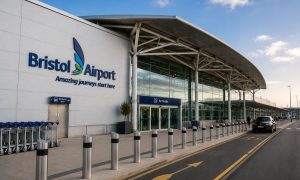
Airports still enforcing the 100ml rule: Manchester, Stansted, Luton, East Midlands, Liverpool, Newcastle, Bristol, and Glasgow. At these airports, the traditional approach still applies — each liquid container under 100ml, all packed into a single transparent resealable bag no larger than 20cm x 20cm.
It is worth being clear about one detail that catches people out: even at airports that have made the switch, the old-style clear plastic bag is genuinely not required anymore. You can simply leave your liquids in your normal hand luggage. At airports still on the 100ml rule, the bag requirement remains exactly as it always has been.
The Department for Transport has said it wants the 100ml rule eliminated at all significant UK airports by the end of 2026, but given how far behind schedule this rollout already is, it is sensible to check your specific departure airport before you pack rather than assume the new rule applies everywhere.
Birmingham Airport Liquids Rules: What to Know
For Midlands travellers, this is the one that matters most. Birmingham Airport liquids rules changed in early 2026 alongside Heathrow, Gatwick, and Edinburgh. BHX now operates under the new system — liquids in containers up to 2 litres can stay in your hand luggage, with no need for a separate clear bag.
This is genuinely good news if you are flying out of Birmingham Airport in 2026. Full-size toiletries, that bottle of wine you picked up as a gift, sun cream in a normal-sized bottle — none of it needs decanting into tiny travel containers anymore. It also means one less thing to fumble with at the security tray, which genuinely does speed up the process during busy periods.
One important detail still applies even at Birmingham: liquids inside metal flasks or vacuum-insulated bottles must be completely emptied before security, because the scanners cannot see through the double-layer insulation these containers use. Fill up again once you are through.
What Liquids Can I Take on a Plane in the UK?
Regardless of which rule your departure airport is following, it helps to know what actually counts as a liquid under UK airport security rules. The definition is broader than most people expect — if it pours, spreads, sprays, or smears, it counts.
This includes the obvious things: water, juice, alcohol, perfume, and shampoo. It also includes things people often forget about: toothpaste, lip balm, mascara, peanut butter, jam, soup, hummus, and yoghurt. Aerosols count too, including deodorant and hairspray, though they cannot be used on board the aircraft due to the enclosed cabin space.
At airports still working under the 100ml rule, all of these need to fit within that limit, packed into your one clear resealable bag. At airports with the new system, the same items are fine in containers up to 2 litres, kept in your normal bag.
Exceptions that apply everywhere, regardless of which rule your airport follows:
Medicines and medical liquids needed during your flight are allowed above the standard limit, provided you carry documentation — a prescription or a letter from your GP confirming you need them for the journey.
Baby food and milk for infants travelling with you is permitted in reasonable quantities for the flight.
Anything bought after you have passed through security — duty-free liquids, drinks from airside shops — can be taken on board, sealed in a tamper-evident bag with your receipt inside, even if it exceeds the standard limit.
Practical Tips for Packing Liquids in 2026
Even with the new, more relaxed rules at several major airports, a bit of preparation still makes your security experience smoother.
Check your specific departure airport before you fly, not the general headlines. “UK liquids rules are changing” does not mean every airport has changed. Confirm directly with your departure airport’s website close to your travel date, since the rollout continues to evolve throughout 2026.
Check your return airport too. This is the detail that catches people out most. If you fly out from Birmingham under the new 2-litre rule but your return flight departs from an airport still on the old system, the 100ml rule applies on your way home. Plan your packing for the stricter of your two airports if you are unsure.
Keep a clear bag in your hand luggage regardless. Even at airports with the new scanners, having a small clear bag ready as a backup costs nothing and saves confusion if there is a system issue or a manual check on the day.
Empty metal and vacuum-insulated bottles before security. This applies everywhere, new system or old. The insulation blocks the scanners from seeing what is inside.
Pack medication separately with documentation. Regardless of which liquids rule applies, having a prescription or doctor’s letter ready for anything over the standard threshold avoids unnecessary delays.
Why a Calm Start to Your Journey Matters More Than the Rules Themselves
All of the above is useful, but the honest truth is that most security delays are not actually about the liquids rules at all. They are about people arriving rushed, stressed, and unprepared, having spent the journey to the airport worrying about traffic, parking, or whether they left enough time.
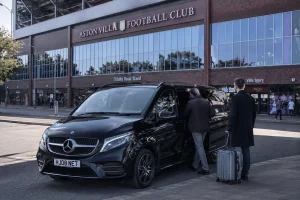
A calm, well-planned journey to the airport changes the whole experience before you have even reached security. This is where a pre-booked chauffeur transfer to Birmingham Airport makes a genuine difference. Your driver calculates the right pickup time based on real traffic conditions, gets you to the terminal with proper time to spare, and removes the parking and driving stress that so often eats into the buffer people leave for security.
For Heathrow specifically, NET’s complete guide to Heathrow Terminal 2 and Terminal 5 guide cover the terminal-specific details worth knowing before you travel, alongside the best airport transfer routes from Birmingham to Heathrow.
Why National Executive Transfers for Your Airport Journey
National Executive Transfers has been getting passengers to UK airports since 2015, with the office based on-site at Birmingham Airport. Every driver is DBS-checked, fully licensed, and genuinely understands what a stress-free start to a flight actually requires — including realistic timing that accounts for security, regardless of which liquids rule your departure airport is following.
With over 2,600 five-star Google reviews, the team’s approach to airport transfers is built on getting the small details right consistently, not just on the day everything goes smoothly.
For airport journeys, the Mercedes E-Class suits solo travellers and couples, while the Mercedes V-Class gives families and groups the space for luggage and everyone travelling together comfortably. Every airport transfer includes flight tracking, meet and greet inside the terminal, and 60 minutes of free waiting time on arrivals.
Book online through the NET booking page for an instant fixed price, or call 01564 778080. The team is available 24 hours a day, every day of the year.
Frequently Asked Questions
It depends on your departure airport. Heathrow, Gatwick, Birmingham, and Edinburgh now allow liquids in containers up to 2 litres in your normal hand luggage, with no separate clear bag required. Manchester, Stansted, Luton, East Midlands, and several other UK airports still enforce the traditional 100ml liquids rule, requiring containers under 100ml packed into a single clear resealable bag.
No, not yet. The 100ml rule has been lifted at Heathrow, Gatwick, Birmingham, and Edinburgh due to new CT scanner technology. Other major UK airports, including Manchester and Stansted, are still working under the old system as of mid-2026, though further airports are expected to roll out the new scanners throughout the year.
At airports with approved CT scanners, passengers can carry liquids in containers up to 2 litres in their hand luggage, with no limit on the number of containers and no requirement for a separate clear plastic bag. This applies at Heathrow, Gatwick, Birmingham, and Edinburgh as of mid-2026.
Birmingham Airport has adopted the new 2-litre liquids rule alongside Heathrow, Gatwick, and Edinburgh. Liquids in containers up to 2 litres can stay in your normal hand luggage with no clear bag required. Metal and vacuum-insulated bottles must still be emptied before security.
Anything that pours, spreads, sprays, or smears counts as a liquid. This includes drinks, toiletries, cosmetics, and spreadable foods like jam, honey, soup, and yoghurt. Aerosols also count, though they cannot be used on board the aircraft.
Only at airports still enforcing the 100ml rule. At Heathrow, Gatwick, Birmingham, and Edinburgh, the clear bag is no longer required as liquids can stay in your normal hand luggage under the 2-litre limit.
The stricter rule applies to whichever airport you are departing from at that point in your journey. If you fly out from an airport with the 2-litre allowance but return from one still on 100ml, you will need to follow the 100ml rule for your return journey home.
Yes, at every UK airport regardless of which liquids rule applies. Medicines needed during your flight are permitted above the standard limit with appropriate documentation, such as a prescription. Baby food and milk for infants travelling with you is also permitted in reasonable quantities.
Liquids purchased after security, including duty-free, can be carried on board even if they exceed the standard limit, as long as they are sealed in a tamper-evident bag with the receipt visible. If you have a connecting flight through another airport, check whether you will need to pass through security again, as this can affect what you are allowed to keep.
Check your airport's official website close to your travel date, as the rollout of new scanners continues throughout 2026 and rules can change. Gov.uk's hand luggage guidance is also a reliable source for the latest national position.