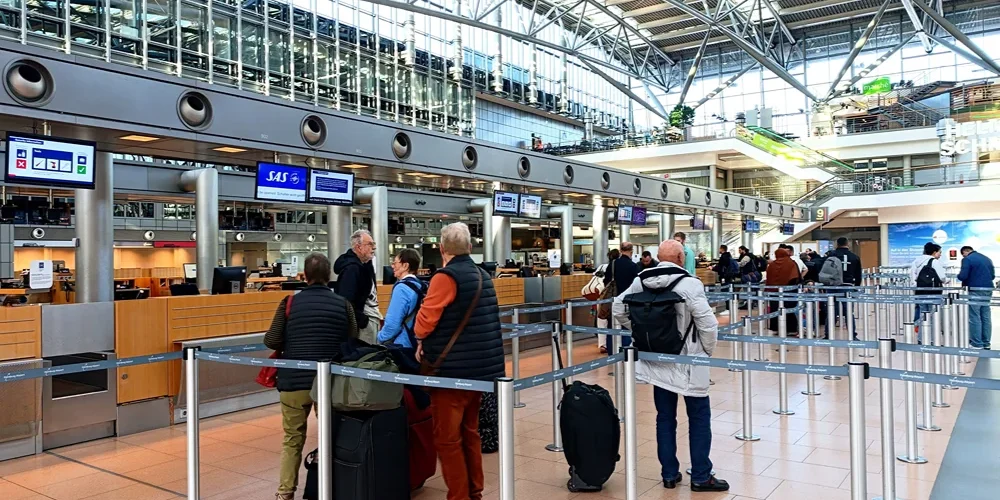
You’ve timed your journey to the airport perfectly, and then you round the corner and see the security queue snaking back past the check-in desks. Knowing which UK airports tend to move fastest through security, and which ones genuinely don’t, is worth understanding before you book, not after you’re standing in the queue.
UK airport security queue times vary considerably by airport, and the gap between the fastest and slowest is bigger than most people expect. This guide uses the Department for Transport’s own 2025 passenger survey data, published in August 2026, to give an honest, sourced answer rather than guesswork.
Understanding UK airport security queue times properly means looking at genuine, dated survey data rather than repeating a figure someone quoted once and never checked again.
Which UK airport actually has the shortest security queue?
Based on the most recent official data, Luton and East Midlands genuinely lead the pack.
The data behind this answer
The DfT’s Air Passenger Experience of Security Screening release surveyed over 15,000 passengers across eight UK airports in 2025. These were Birmingham, East Midlands, Gatwick, Heathrow, London City, Luton, Manchester and Stansted. This is the most current official comparison available.
Luton comes out on top
80% of passengers surveyed at Luton reported queuing for 5 minutes or less, the highest proportion of any airport in the survey. Only a small fraction reported queues beyond 15 minutes.
East Midlands follows closely behind
79% of East Midlands passengers reported queuing for 5 minutes or less, and just 1% reported queuing beyond 20 minutes, the lowest of any surveyed airport.
East Midlands is new to this particular survey
2025 was the first year East Midlands was included in the DfT’s security screening survey. There’s no prior-year comparison available yet, so its strong debut figures are genuinely worth watching over the next survey cycle to see whether they hold. East Midlands also recorded the highest proportion of passengers praising staff attitude and politeness (18%) of any airport surveyed.
Gatwick performs strongly too
77% of Gatwick passengers reported a queue of 5 minutes or less in 2025, a genuine improvement on 61% the year before.
Birmingham sits at the other end of the table
Only 41% of Birmingham passengers reported queuing for 5 minutes or less, the lowest proportion of any airport surveyed. 10% reported queuing for more than 20 minutes, the highest proportion of any airport.
This doesn’t mean Birmingham should be written off
The picture has genuinely improved. In 2024, 16% of Birmingham passengers reported queues over 20 minutes. That’s fallen to 10% in 2025, a real improvement worth acknowledging even though Birmingham still trails the fastest airports.
London City sits in the middle of the table
69% of London City passengers reported a 5-minutes-or-less queue in 2025, matching Heathrow’s figure exactly, though this was a genuine drop from 81% in 2024. Overall satisfaction at London City also fell year on year, from 97% to 85%. This is worth noting if you’re comparing this specific airport against its own recent reputation rather than the current picture.
How reliable are these queue-time figures?
This matters more than the headline numbers themselves.
These are passenger perceptions, not stopwatch measurements
The DfT’s own technical note is explicit about this: figures represent passengers’ perceptions of how long they queued, and people can overestimate time spent waiting. These percentages give a genuine indication of relative queuing experience between airports, not an exact measured time.
An “average queue time” doesn’t mean your queue time
A single average figure hides huge variation by time of day, day of the week, and season. The DfT data itself is reported in bands (5 minutes or less, 6 to 9 minutes, and so on) precisely because a single average would be misleading.
Flight banks affect this more than the airport’s underlying capability
Airports schedule departures in clusters, particularly for holiday charter routes and early morning long-haul flights. Arriving at the peak of one of these banks can mean a genuinely longer queue than the annual average suggests, regardless of how well the airport generally performs.
Terminal matters as much as airport
Heathrow’s own data shows this clearly. Terminal 5 had the highest proportion of passengers reporting queues of 10 minutes or more (26%), compared with Terminal 3 (22%). Treating “Heathrow” as a single figure misses this real difference.
Check which terminal your specific flight actually uses
Terminal 5 handles British Airways’ own flights primarily, while other airlines and alliances use Terminals 2, 3 and 4. Before assuming Heathrow’s overall figure applies to you, confirm which terminal your airline actually operates from, since the difference between terminals is genuinely larger than many travellers expect.
New security technology is still being rolled out unevenly
During 2025, UK airports worked through installing the Next Generation Security Checkpoint technology, the newer scanners that let passengers leave laptops and liquids in their bags. This rollout completed at different times at different airports, so passenger experience genuinely varied depending on when a specific airport’s upgrade finished.
Data quality varies between airports too
The DfT flags a genuine issue with Manchester’s 2025 figures specifically. Around 10% of responses to the queuing question were recorded as “no answer”, considerably higher than other airports. This may understate how many passengers actually queued for 5 minutes or less.
Treat this data as a genuine guide, not a guarantee
The relative ranking between airports is a useful, sourced starting point. Your actual experience on a specific day depends on time of day, season, and simple luck, none of which a survey average can promise you.
Business and leisure travellers reported genuinely different experiences
Across all eight airports, 88% of business travellers reported satisfaction with security screening, compared with 85% of leisure travellers. Long-haul passengers reported the highest satisfaction of all (90%), ahead of short-haul (84%) and domestic flights (85%). This is a pattern worth knowing if you’re comparing your own specific type of journey against the headline figures.
If you already know your departure airport and roughly when you’re flying, check that airport’s current guidance on peak times. This helps you decide how much buffer to build in.
How does Birmingham Airport actually compare?
Being straightforward about the data here matters more than being defensive about it.
The current picture, honestly stated
Birmingham had the lowest proportion of passengers reporting a 5-minutes-or-less queue (41%). It also had the highest proportion reporting over 20 minutes (10%) among the eight airports surveyed in 2025.
Queuing was flagged as the specific weak point
Of Birmingham passengers who named a least satisfactory aspect of security screening, queuing was the most common answer, cited by 13%. This was the highest proportion of any airport for this specific issue.
The trend is genuinely improving
This isn’t a static picture. The proportion citing queuing as their least satisfactory aspect fell from 19% in 2024 to 13% in 2025. 20-plus-minute queues fell from 16% to 10% over the same period.
Overall satisfaction remains genuinely high
Despite the queuing figures, 84% of Birmingham passengers said they were satisfied or very satisfied with their security screening experience overall, an improvement on 81% in 2024.
What passengers actually praised at Birmingham
Even with the queuing complaints, the fast speed of the actual screening process itself was the most commonly cited positive, mentioned by 27% of Birmingham passengers. This suggests the bottleneck sits in the waiting time before the lane, not the screening process once you reach it.
Acceptance of inconvenience improved too, though it lags other airports
85% of Birmingham passengers agreed or strongly agreed that any inconvenience caused by security screening was acceptable in 2025, up from 79% in 2024. This remains the lowest acceptance figure of any airport surveyed. Birmingham also had the highest proportion of passengers disagreeing outright (5%), worth knowing if predictability matters as much to you as the raw queue length.
Peak times matter enormously at any airport, Birmingham included
Early morning departures and school holiday periods put the most pressure on any UK airport’s security lanes. If Birmingham genuinely is your most convenient airport, choosing an off-peak time and building in a proper buffer matters more than the airport itself.
Why Birmingham can still make genuine sense for Midlands travellers
A shorter security queue at a further-away airport doesn’t automatically save you time once the extra road journey is factored in. Compare the whole journey honestly, not just the security data in isolation.
How do Heathrow, Gatwick and Manchester compare?
Each of these has a genuinely different profile worth understanding on its own terms.
Heathrow
69% of Heathrow passengers reported a 5-minutes-or-less queue in 2025, with only 1% reporting over 20 minutes, the lowest proportion of any airport for that specific long-queue category. Terminal 5 ran slightly slower than Terminal 3, so which terminal you’re using genuinely matters here.
Heathrow suits long-haul travellers particularly well
90% of Heathrow passengers reported satisfaction with their overall security experience, the second-highest of any airport surveyed. Long-haul passengers across all airports reported higher satisfaction than short-haul or domestic travellers too.
Gatwick
77% of Gatwick passengers reported a 5-minutes-or-less queue, a genuine improvement from 61% in 2024. Gatwick also recorded the highest proportion of passengers agreeing that any inconvenience was acceptable (98%).
Gatwick’s improvement is worth noting specifically
A jump of 16 percentage points in one year is a meaningful shift. It’s the kind of change that makes last year’s queue reputation genuinely outdated if you’re basing a decision on older information.
What passengers specifically liked at Gatwick
Being able to leave items in their bag during screening was the most commonly cited positive at Gatwick, mentioned by 16% of passengers. This was the highest proportion of any airport for this specific feature, and points to genuine improvements in the actual screening process there.
Manchester
48% of Manchester passengers reported a 5-minutes-or-less queue, with 5% reporting over 20 minutes. Treat this specific figure cautiously though, since the DfT itself flags a data quality issue with Manchester’s 2025 responses.
Manchester’s genuine strength lies elsewhere
91% of Manchester passengers reported overall satisfaction, the second highest of any airport, suggesting the queuing figures alone don’t tell the whole story of the actual passenger experience there.
Manchester’s specific complaints have genuinely eased too
General organisation and queuing were the least satisfactory aspects reported at Manchester, cited by 3% and 2% of passengers respectively. Both figures are down from 2024, when general organisation and the slow speed of screening were each cited at 4%. This direction of travel is positive even accounting for the data caveat covered above.
The honest summary across all three
Heathrow and Gatwick both improved meaningfully in 2025. Manchester’s queuing data specifically carries a genuine caveat, though its overall satisfaction figures remain strong regardless of that specific measurement issue.
Route availability often decides this before queuing data even matters
For many journeys, only one or two of these airports actually serve the route you need. If Heathrow is the only airport with a direct flight to your destination, its queuing performance is worth knowing but won’t change which airport you fly from.
The national trend across all core airports is genuinely improving
Looking across the five airports the DfT has tracked consistently for several years, Gatwick, Heathrow, Luton, Manchester and Stansted, the picture is genuinely improving. The proportion of passengers queuing 5 minutes or less rose from 52% in 2023 to 57% in 2024 to 64% in 2025. This is a real, sustained improvement worth knowing about regardless of which specific airport you’re comparing.
Is fast-track security actually worth paying for?
Be honest with yourself about your actual journey before paying for this.
What fast track genuinely does
A dedicated screening lane, generally moving faster than the standard queue, bookable in advance at most major UK airports directly through the airport’s own website.
Book it directly with the airport, not a third party
Booking fast track through the airport’s own official website confirms you’re getting the genuine service at the advertised price. A third-party reseller often adds a margin on top. Check the airport’s own site before booking anywhere else.
What it doesn’t do
It doesn’t guarantee an exact time, and it doesn’t remove queuing entirely, particularly during a genuinely busy flight bank when even the fast-track lane sees higher demand. Cost also varies considerably by airport and by how far in advance you book. Check the actual current price for your specific date rather than assuming a fixed fee applies everywhere.
When it’s probably worth paying for
An early morning departure during school holidays, or a tight connection, makes a reasonable case for booking fast track. So does simply being a traveller who values certainty over saving a modest fee, particularly if the airport in question is already showing weaker queuing figures on the DfT’s own current data.
When it’s probably unnecessary
A mid-morning or early afternoon departure outside peak season, at an airport that’s already performing well on the DfT’s own figures, may not need the extra cost at all.
Don’t assume every airport’s fast track works the same way
Availability, cost and exactly how much time it genuinely saves vary by airport. Check the specific terms for your actual departure airport rather than assuming a blanket rule applies everywhere.
Families sometimes benefit more than the cost suggests
Managing children, pushchairs and extra bags through a standard queue takes genuinely longer than the same process for a single adult travelling light. For a family on an early or peak-period flight, fast track can be worth considering even if the headline saving looks modest on paper.
How should you plan your arrival time?
This depends on more than the security queue alone.
Start with your airline’s own guidance
Airlines and airports publish recommended arrival times that vary by destination and flight type. Check your specific airline’s current guidance rather than assuming a single rule covers every journey.
Add a genuine buffer for peak periods
Early mornings, school holidays, and the days immediately around Christmas and New Year all put more pressure on security lanes than a typical Tuesday afternoon in term time.
Bag drop and check-in add time before security even starts
If you’re checking luggage rather than using online check-in and bag drop, build this into your timing separately. It’s a genuinely different queue with its own variability.
Walking to the gate isn’t instant either
At a larger airport, particularly Heathrow, the walk from security to your actual gate can add a genuine 10 to 20 minutes. This depends on where in the terminal you land.
Weekday mornings can be genuinely quieter than weekends
Business travel patterns mean a Tuesday or Wednesday morning departure sometimes clears security faster than the same time on a Friday or Sunday, when leisure travel volumes peak. If your flight time has any flexibility, this is worth factoring in alongside the airport itself. This applies regardless of which specific airport you’re actually flying from.
A five-minute security queue doesn’t help if the drive took an hour longer than planned
A five-minute queue sounds great, but it’s not much use if you’ve spent an extra hour stuck in traffic getting there. Plan the whole journey, not just the bit inside the terminal.
Should a Birmingham traveller actually fly from a different airport?
A genuine decision framework, not a one-size-fits-all answer.
Choose Birmingham if…
Your flight is genuinely only available from BHX, or the road journey there is considerably shorter than any alternative. The time saved elsewhere often wouldn’t outweigh the extra driving anyway, particularly once you account for parking and getting back afterwards too.
Consider East Midlands if…
You’re closer to the East Midlands than to Birmingham, your route is served from there, and you’d genuinely value East Midlands’ consistently strong queuing and satisfaction figures.
Consider Heathrow if…
You’re travelling long-haul, or need a specific route only Heathrow serves. The considerably longer road journey from Birmingham is often offset by better connections or timing for your actual destination.
Consider Manchester if…
Your route is genuinely better served from Manchester, and you’re comfortable treating the queuing data there with the caveat the DfT itself has flagged.
Consider Gatwick if…
A specific route or fare genuinely makes Gatwick worthwhile, and you’re comfortable with the longer road journey from the Midlands in exchange for its recent queuing improvement.
Stansted and London City suit narrower circumstances
Stansted’s queuing figures trail most other airports, though it remains the practical choice for certain low-cost European routes not well served elsewhere. London City suits a specific business-traveller need for proximity to central London, even though its 2025 satisfaction figures dipped compared with the year before.
The honest bottom line
Don’t switch airports purely because one has a marginally shorter security queue on a survey. Switch because the whole journey, flight availability, road time, and cost together, genuinely works out better.
If you’re weighing up whether a different airport is worth the longer drive, compare the complete journey time honestly. Don’t just look at the flight and security queue in isolation.
What should you tell your chauffeur, and where does National Executive Transfers fit?
Getting the road journey right removes one genuine variable from an already uncertain day.
The essentials to confirm
Flight number, departure airport and terminal, pickup address, pickup time, passenger count, and luggage requirements all form the baseline for any genuine booking. Confirming these clearly at the outset saves back-and-forth messages closer to your actual travel date. Getting these details right the first time avoids a confusing conversation on the morning of travel itself. Nobody wants to be double checking basic information at that point.
Anything specific worth mentioning
Child seats if genuinely needed, and any special requirements, should be confirmed at the point of booking rather than raised on the day itself. If several passengers are travelling together with varying luggage, mention this clearly too, so the right vehicle size is arranged from the start.
Return journey details, if you already know them
Mentioning your return flight at the same time as booking the outbound journey saves arranging a second booking separately later.
Build the airport’s peak-time picture into your pickup time
If you’ve confirmed your specific airport is running a busier-than-usual morning, whether from the DfT data or the airport’s own current guidance, factor this in properly. Build it into the pickup time you agree with your driver, not just your own arrival buffer at the terminal.
Get your booking confirmed in writing
Ask for written confirmation of the pickup time, vehicle type and a direct contact number. This gives you something concrete to check against on the day, rather than relying on memory of an earlier phone call made weeks before travelling. It’s a small habit that removes a genuine source of confusion on the morning itself.
Things to consider before booking
- Have you checked your specific airline’s recommended arrival time, not a general rule?
- Does your flight fall during a genuinely peak period, like school holidays or early morning?
- Have you confirmed your terminal specifically, particularly at Heathrow?
- Is fast track genuinely worth it for your specific journey, or unnecessary for an off-peak flight?
- Have you compared the whole journey time, not just the airport’s security queue figures?
- Have you confirmed your pickup details and luggage requirements with your transfer provider?
Where National Executive Transfers fits into this
National Executive Transfers is a Birmingham-based chauffeur service with professional drivers, running Mercedes E-Class, S-Class and V-Class vehicles across airport transfers throughout the UK. Flights are monitored automatically, and meet and greet is included as standard, alongside fixed pricing agreed before you travel.
Being straightforward about what this does and doesn’t solve
A chauffeur cannot make a security queue move faster, and NET doesn’t claim otherwise. What a pre-booked transfer genuinely removes is the uncertainty of the road journey itself: parking, traffic, and the drive there. That’s one less variable on a day that already has enough of them.
For further reading
Our Birmingham Airport complete guide covers terminal layout and general planning in more depth, and the Heathrow arrival guide covers that airport’s specific timing considerations. The Gatwick terminal guide covers North and South Terminal differences, and the airport transfers page covers what to expect from the road journey itself.
If you’d rather remove the road journey and parking from the equation entirely, a pre-booked chauffeur genuinely makes that part of the day simpler. This applies whichever UK airport you’re flying from. Get in touch with National Executive Transfers to arrange your transfer before you travel.
Frequently Asked Questions
Based on the DfT's 2025 data, Luton (80% queuing 5 minutes or less) and East Midlands (79%) lead, though both are passenger-perceived figures rather than exact measured times.
Across all eight surveyed airports, 63% of passengers reported queuing 5 minutes or less in 2025, though this varies considerably by airport, time of day and season.
Only 41% of Birmingham passengers reported a 5-minutes-or-less queue in 2025, with 10% reporting over 20 minutes, though this has genuinely improved from 2024's figures.
69% of Heathrow passengers reported a 5-minutes-or-less queue in 2025, with real variation between terminals, Terminal 5 ran slightly slower than Terminal 3.
On the DfT's current data, East Midlands performed considerably better, though route availability and road journey time matter just as much as this figure alone.
For an early morning departure during school holidays or a tight connection, often yes. For an off-peak flight at an airport already performing well, probably not necessary.
Some airports, including Heathrow, publish live security wait information on their own website and app, worth checking on the day itself rather than relying on annual averages.
48% of Manchester passengers reported a 5-minutes-or-less queue in 2025, though the DfT itself flags a data quality issue with this specific figure, so treat it cautiously.
Yes. Every UK airport surveyed shows genuinely higher pressure on security lanes during school holidays and early mornings, regardless of that airport's annual average performance.
A chauffeur can't make security move faster, but a pre-booked transfer with flight monitoring removes the uncertainty of the road journey itself, one less variable on a delayed day.