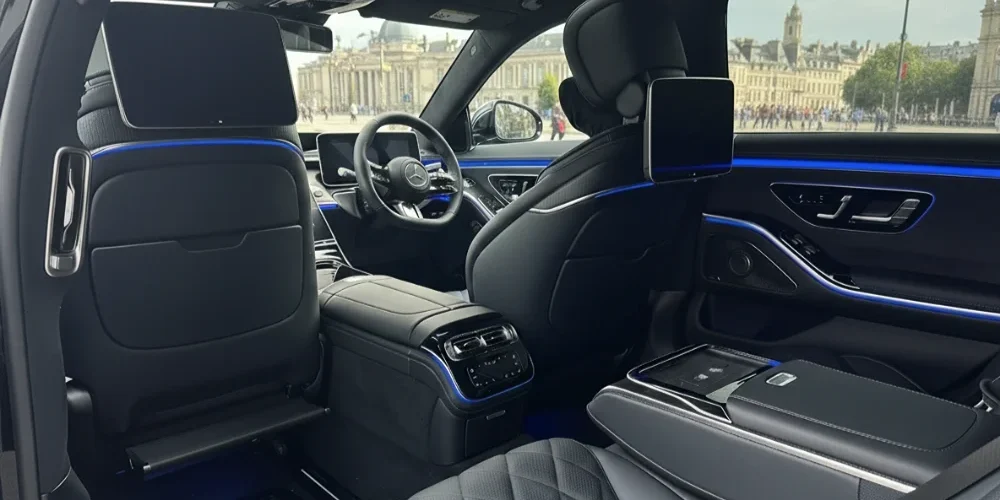
You’ve booked a chauffeur for the first time, and now three questions are running through your head. Do I tip the driver? Which seat am I actually meant to sit in? And what exactly happens when the car pulls up?
Chauffeur etiquette UK tipping questions come up more than almost anything else for first-time passengers, and the honest answer is simpler than most people expect. This guide walks through tipping, seating and the whole journey, from booking to arrival, so nothing feels like guesswork on the day.
Getting chauffeur etiquette UK tipping advice right matters more than most first-time passengers realise, since a lot of what circulates online simply doesn’t reflect how UK tipping culture actually works.
Do you need to tip a chauffeur in the UK?
Not as a rule, and there’s no need to feel awkward about it either way.
UK tipping culture is genuinely different from what many guides assume
A lot of “how much to tip a chauffeur” advice online targets an American audience, where employers often build tipping into how they pay service workers. UK tipping culture works differently. UK minimum wage law covers workers here regardless of tips. Tipping across most UK services, including private hire and chauffeur travel, remains genuinely discretionary rather than expected.
This is common practice, not a formal rule
Nobody will be offended if you don’t tip, and a tip is generally appreciated when offered, whatever the amount. This applies to a chauffeur journey just as much as it does to a taxi or a restaurant bill in the UK.
Check whether gratuity is already included
Some operators build a service charge or gratuity into their pricing, particularly for corporate accounts or fixed-price packages. This is operator policy, not a universal standard, so check your specific booking confirmation or ask directly before assuming either way.
Service quality is what most people actually respond to
If a chauffeur handles your luggage without being asked, adjusts smoothly to a schedule change, or simply makes an already stressful day easier, this is exactly the kind of thing that leads many passengers to acknowledge it with a tip. This is personal preference, not an obligation.
Journey length and complexity matter too
A short, straightforward local transfer and a long-distance journey involving several stops are genuinely different situations. Many passengers naturally consider whether a longer or more demanding journey deserves more than a token amount, though this remains entirely at your discretion and never a fixed obligation.
Unsociable hours are another factor some passengers weigh up
A very early morning or late-night pickup asks more of a driver than a journey during normal working hours, and some passengers factor this into their decision when tipping. Again, this is entirely personal preference rather than an expectation.
Cash versus digital tipping depends on the operator
Some chauffeur services can add a tip to a card payment or invoice, while others work primarily with cash. If you’d like the option to tip and don’t carry cash, ask the operator directly whether a digital option exists before the day of travel. This small check removes any last-minute awkwardness at the end of the journey, particularly if you’ve decided in advance that you’d like to acknowledge good service.
Don’t let uncertainty about tipping overshadow the actual journey
First-time passengers sometimes spend more time worrying about tipping than the etiquette genuinely warrants. Whatever you decide on the day, whether that’s a small tip, nothing at all, or something in between, this is a personal choice rather than a test you can get wrong.
If this is your first chauffeur booking, ask the operator about pickup arrangements, luggage assistance and whether gratuity is included. Doing this before the day of travel removes any uncertainty.
How much should you tip a chauffeur in the UK?
There’s no official UK rate, and treating one figure as universal law would be inaccurate.
Typical guidance, not a fixed UK rule
Rather than a percentage, many UK passengers who choose to tip a chauffeur do so with a modest cash amount reflecting the specific journey. This commonly sits somewhere in the range of a few pounds for a straightforward local trip, rising for a longer or more demanding journey. These are typical examples only, not an official rate.
What genuinely influences the amount, if you choose to tip
A short airport transfer with no complications sits at one end of the scale. A long-distance journey, significant luggage assistance, or waiting time sits at the other end. So does a chauffeur going noticeably out of their way to help. The decision is genuinely yours to make based on your own experience of the journey.
Exceptional service versus ordinary, professional service
Professional, reliable service is simply what a chauffeur booking is meant to deliver, and doesn’t require a tip to be considered successful. A tip becomes more of a genuine choice when something about the journey went noticeably beyond the ordinary. Help during a difficult pickup or calmly accommodating a late change are good examples.
Weddings and events often work differently
For a wedding or formal event, gratuity is sometimes arranged in advance through whoever organised the transport, rather than handled individually by each guest. If you’re a guest rather than the person who booked the vehicle, this usually isn’t something you need to think about.
Don’t feel you need to tip simply because the car is smart
The quality of the vehicle doesn’t change UK tipping culture. A well-presented Mercedes and professional service are simply what you’re paying for in the fare itself, not an automatic reason to add more on top.
A simple decision framework, rather than a fixed number
Ask yourself honestly whether the service felt ordinary and professional, or genuinely went beyond what you expected. If it’s the former, no tip is needed. If it’s the latter, a modest amount reflecting how the journey actually went is a reasonable, personal choice.
This differs from tipping guidance for other countries too
Some parts of continental Europe follow a rough five to ten per cent convention for good service, and the US follows a considerably higher, near-compulsory percentage culture. Neither maps directly onto UK chauffeur travel, so it’s worth being cautious about applying either convention here simply because it’s what you’ve read elsewhere.
Where should you sit in a chauffeur car?
There’s no single correct seat, and the right choice depends on your situation.
The rear seats are the common default
Most solo passengers and couples sit in the rear of the vehicle. This is simply the common practice for a chauffeur-driven journey rather than a strict requirement.
Sitting behind the driver isn’t compulsory
Some passengers prefer the seat behind the driver for a sense of privacy, while others prefer the offside rear seat for easier access or visibility. Both are entirely normal, and the choice comes down to personal preference.
The front passenger seat can make genuine sense too
For a solo passenger who’d simply rather sit up front, or during a shorter, more casual journey, this is generally fine to ask for. It’s not the default expectation for a formal chauffeur booking, but it isn’t against any rule either.
This isn’t a status statement either way
Some first-time passengers worry that sitting up front looks less formal, or that sitting in the rear feels overly grand. Neither reading is accurate. Where you sit reflects comfort and practicality, not a statement about how important you consider yourself.
Couples and small groups usually sit together in the rear
This is simply the practical, common arrangement rather than a formal convention, and most vehicles are laid out with this in mind.
Larger groups depend on the vehicle
A V-Class or similar larger vehicle accommodates more passengers across multiple rows. Seating naturally spreads out based on comfort, luggage and who’s travelling with whom, rather than a fixed etiquette rule.
The chauffeur may occasionally suggest a specific arrangement
For safety, luggage balance, or simply making a journey more comfortable, a chauffeur might suggest where to sit, particularly with a larger group or unusual luggage. This is professional convention, not something to feel awkward about.
If you’re genuinely unsure, just ask
A chauffeur would rather answer a quick question about seating than have a passenger feel uncertain throughout the journey. There’s no seating question too basic to ask.
First-time nerves about this are genuinely common
Plenty of experienced chauffeur passengers admit they felt uncertain about seating on their first booking too. This isn’t something unique to you, and it fades quickly once you’ve made a couple of journeys.
What should you expect when the chauffeur arrives?
A realistic walkthrough, rather than a theatrical script.
Before pickup
You’ll typically receive booking confirmation with the pickup time, address and, often, driver or vehicle details. For an airport collection, providing your flight number in advance lets the operator track your specific flight for delays.
At pickup
The chauffeur generally arrives ahead of the agreed time, and for an airport meet and greet, often waits in arrivals holding a name board. At a home or office pickup, the driver typically waits at the vehicle or approaches to confirm they’ve got the right passenger.
It’s genuinely fine to confirm details before getting in
Checking a driver’s name or vehicle details against your booking confirmation before you get in is simply sensible, not rude or suspicious. A professional driver expects this and won’t be put off by the question.
Luggage and doors
A chauffeur commonly helps with luggage into and out of the vehicle without being asked, and may open the passenger door as you approach. This is common professional practice, though it can vary slightly by operator and situation, particularly with a very quick stop.
Settling in
Once you’re in the vehicle, take a moment to get comfortable and fasten your seatbelt. Let the driver know if the temperature or music isn’t quite right. Most chauffeurs will ask, or adjust based on simple, unspoken cues.
During the journey
Conversation is entirely up to you. Some passengers enjoy chatting, others prefer a quiet journey to work, rest or make calls. A professional chauffeur will generally read this from your cues rather than needing to be told directly. If you’d prefer quiet from the outset, it’s completely fine to simply mention this early on.
Route and stops
If you need to add a stop, or a route changes for genuine reasons like traffic, the chauffeur will generally explain. This keeps you informed about what’s going on. If you want to request an unplanned stop yourself, it’s simply a matter of asking, rather than something considered impolite.
Changing your mind mid-journey is genuinely normal
Plans shift, and a professional chauffeur won’t think twice about a reasonable change of destination or an extra stop, provided you give them a bit of notice where possible. This is a genuinely common part of the job rather than an inconvenience.
At your destination
The chauffeur typically brings the vehicle to a stop, helps with luggage again, and may open the door depending on where you’ve been dropped. A simple thank you closes the journey naturally, and if you’re tipping, this is generally when it happens.
What is polite behaviour inside a chauffeur car?
Everyday courtesy, not a formal code of conduct.
Being ready at pickup
Being ready at the agreed time, or letting the operator know early if you’re running late, helps the whole day run smoothly. This matters particularly if the driver has another booking afterwards.
Seatbelts and basic vehicle respect
Wearing a seatbelt is a legal requirement, not just etiquette. Treating the vehicle with basic care, avoiding spills, keeping rubbish contained, is common courtesy rather than a strict rule.
Phone calls and conversation
Taking a call, working quietly, or chatting with a travelling companion is entirely normal. Most chauffeurs are used to passengers doing all three across different journeys and won’t think twice about any of them.
Eating, drinking and smoking
Bringing a coffee or a bottle of water is generally fine, though a full meal is less common given the setting. Smoking and vaping are not permitted in private hire vehicles under UK law, which applies regardless of any individual operator’s own policy.
Alcohol depends on the specific journey and operator
Bringing your own drink, or having one provided as part of a wedding or event booking, varies genuinely by operator and occasion. Check directly if this matters to you, rather than assuming either way.
Children and family travel
Bringing children is entirely normal, and if you need a child seat, mention this clearly when booking rather than assuming one will be available on the day. Requirements and genuine availability genuinely vary by operator, so never assume every chauffeur company handles this in exactly the same way.
Changing the route or making an unplanned stop
This is generally fine to request. It’s worth mentioning as early as possible so the chauffeur can plan around it, particularly if it affects timing for a later part of your day.
If something goes wrong
A spill, a forgotten item, or a genuine problem with the journey is best raised directly with the driver or operator. Doing this calmly resolves most situations quickly. This isn’t a breach of etiquette, it’s simply how these things get resolved.
Forgotten items happen more often than you’d think
If you realise you’ve left something in the vehicle shortly after the journey, contact the operator as soon as possible. A reputable company will generally do what it reasonably can to help, though this depends on the specific operator and situation.
Does etiquette change for airport, business and wedding journeys?
The basics stay the same, but each type of journey has its own practical considerations.
Airport transfers
Providing your flight number lets a chauffeur track genuine delays and adjust pickup automatically. For a very early departure, confirm your pickup time clearly the night before. On arrival journeys, agree a realistic meeting point rather than assuming you’ll simply spot each other in a busy terminal.
Airport tipping specifically
The same discretionary principle applies here as anywhere else. Helping with luggage through a busy terminal, or adjusting smoothly to a delayed flight, are the kinds of things that sometimes prompt a passenger to tip. There’s no obligation either way though.
Overseas visitors sometimes bring a different tipping habit with them
If you’re used to a percentage-based tipping culture from home, it’s worth remembering UK norms genuinely differ. There’s no need to apply a foreign convention here, and a driver won’t expect it either.
Business travel
Punctuality matters more than usual here, since a delay can affect a meeting schedule. Many business passengers use the journey to work or make calls, and a professional chauffeur will generally respect this without needing to be asked for quiet.
Booking on behalf of someone else
If you’re a PA or executive assistant arranging transport for a colleague, share the same essential details, pickup, destination, timing, luggage, as you would for yourself. It’s also worth passing on the traveller’s direct contact number, in case a driver needs to reach them directly on the day.
Confidentiality expectations, honestly stated
Passengers often assume a degree of discretion during business travel, and professional chauffeurs generally understand this is part of the job. This is a reasonable expectation of professional conduct rather than a formal, guaranteed confidentiality agreement. Avoid discussing anything you wouldn’t want overheard in any shared space.
Weddings and special events
Timing around a wedding often depends on photographs, venue access and coordinating with other vehicles, so allow more flexibility than you would for a standard journey. Waiting time between the ceremony and photographs, or between venues, is common and usually planned into the booking.
Wedding chauffeur tipping UK
As mentioned earlier, gratuity for wedding transport is sometimes arranged in advance by whoever booked the vehicles, often the couple or a wedding planner. This means individual guests don’t usually need to handle it themselves on the day. If you’re unsure whether this applies to your situation, it’s a reasonable question to ask the person who arranged the transport.
If you’re the couple booking your own wedding transport
The same discretionary approach applies to you directly. A driver managing a genuinely long day, multiple locations and photographs, waiting patiently between each, is doing more than a standard journey, and some couples choose to reflect that when deciding whether to tip.
What should you tell the chauffeur before the journey?
Complete, accurate information at booking makes the actual day considerably smoother.
The essentials
Pickup address, destination, date, pickup time, and passenger and luggage numbers form the baseline for any booking. Getting these right the first time avoids a confusing conversation on the morning of travel itself, particularly for an early departure when nobody wants to be double checking basic information.
Flight details for airport journeys
Your flight number lets the operator monitor your specific flight, which matters far more than a fixed pickup time if your flight is delayed. This applies to both arrivals and departures, so provide it either way rather than assuming it only matters when you’re landing.
Special requirements
Child seats, accessibility needs, unusual luggage, or any specific requests should be mentioned clearly at booking rather than raised for the first time when the vehicle arrives.
Additional stops or waiting time
If your day involves more than one stop, or you know you’ll need the vehicle to wait, mention this upfront. This lets the operator plan the whole journey properly.
Get confirmation in writing
Ask for written confirmation of your booking, including pickup time, vehicle type and a direct contact number. Having this saved somewhere accessible means you’re not relying on memory of an earlier phone call closer to the day.
Event timing for weddings or formal occasions
If you’re booking transport around a wedding or event, share the schedule, ceremony time, photograph slots, venue changes. This lets the operator plan realistic timings around it.
Things to consider before your first chauffeur journey
- Confirm your pickup time and exact location clearly.
- Ask whether your specific booking includes gratuity.
- Confirm passenger and luggage numbers accurately.
- Mention any child seat or accessibility requirements at booking.
- Tell the operator about additional stops or waiting time in advance.
- Ask if you’re genuinely unsure about seating or any part of the process.
Where does National Executive Transfers fit into this?
A brief, honest look at how NET approaches the passenger experience covered throughout this guide.
What’s actually verified about the service
National Executive Transfers is a Birmingham-based chauffeur service with professional drivers, running Mercedes E-Class, S-Class and V-Class vehicles. NET takes bookings in advance, monitors flights automatically for airport transfers, and includes meet and greet as standard for airport collections.
Vehicle choice reflects your actual journey
The E-Class suits one or two passengers, and the S-Class suits a traveller who wants extra comfort and space. A larger group or family is better served by the V-Class, accommodating up to seven passengers. Confirming your actual passenger and luggage numbers at booking means the right vehicle is arranged from the start, rather than discovered as a mismatch on the day.
Corporate account support
For businesses booking regularly, NET offers corporate account options. This suits a company wanting a consistent, documented approach to staff and client transport.
The etiquette covered here applies whether NET or someone else is driving
None of the seating, tipping or general behaviour guidance in this article is specific to NET. It reflects genuine UK chauffeur etiquette regardless of which company you actually book with, which is exactly why it’s worth understanding properly before your first journey with anyone.
Being clear about what this covers
NET aims to make the process clear from the moment you book through to arrival. Confirming pickup details, luggage arrangements and any special requirements in advance means nothing feels uncertain on the day itself.
For further reading
Our airport transfers page covers what to expect from that specific service, and our business chauffeur services page covers corporate travel arrangements in more depth. For businesses booking regularly, the corporate chauffeur account page covers centralised booking, and our fleet page covers the specific vehicles available.
Chauffeur etiquette in the UK is genuinely simpler than most first-time passengers expect. Tipping remains your choice, seating comes down to comfort rather than strict rules, and a quick question to your driver solves almost anything else. If you’re planning your first chauffeur journey, get in touch with National Executive Transfers to confirm the details in advance. Travel with one less thing to think about.
Frequently Asked Questions
Tipping is generally discretionary rather than expected. Many passengers choose to tip for good service, but there's no obligation, and nobody will be offended either way.
There's no official rate. A modest amount reflecting the journey and service, if you choose to tip at all, is typical guidance rather than a fixed rule.
The same discretionary principle applies. Helping with luggage through a busy terminal or handling a flight delay smoothly are the kinds of things that sometimes prompt a tip, though it isn't required.
Many passengers consider a longer or more demanding journey when deciding whether to tip and how much, though this remains entirely your choice.
Sometimes, depending on the operator and booking type. Check your specific confirmation or ask directly rather than assuming either way.
Most commonly at the end of the journey, once the service has actually been experienced, rather than in advance.
The rear seats are the common default for most passengers, though the front seat, or sitting behind versus beside the driver, all come down to personal preference.
It's a common choice for privacy, but it isn't a rule. Sit wherever feels most comfortable for your specific journey.
A drink is generally fine. A full meal is less common given the setting, and smoking or vaping isn't permitted in private hire vehicles under UK law.
Your pickup address, destination, flight details if relevant, passenger and luggage numbers, and any special requirements like child seats or additional stops.