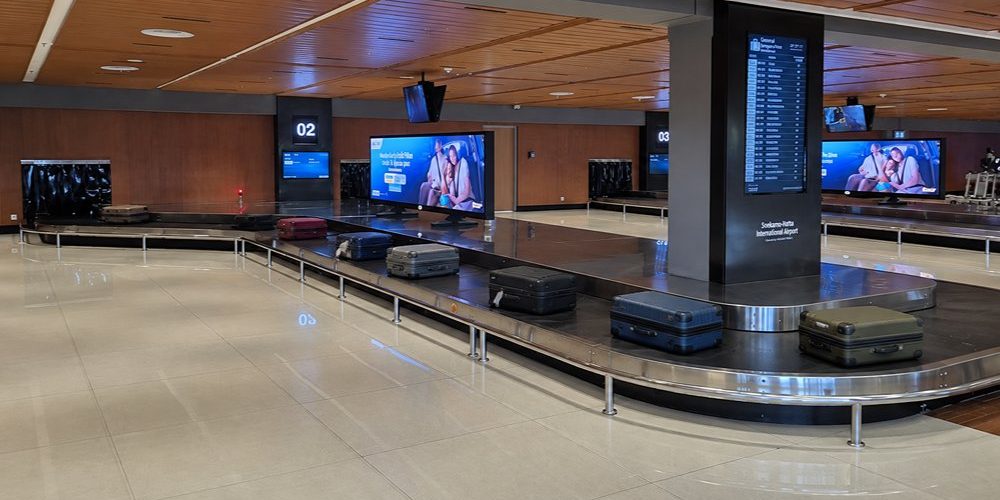
You watch the carousel go round for the third time. Everyone else from your flight has picked up their case and gone. Yours isn’t coming. It’s one of the worst feelings in travel, and it happens more often than most passengers realise.
Here’s the good news. You’re not just at the airline’s mercy. Lost baggage compensation is a real, enforceable right under UK law, not a goodwill gesture. It applies whether your checked baggage gets lost, delayed or damaged.
Here’s the bad news too. Most passengers don’t know what those rights actually are. So they either accept far less than the airline owes them. Or they give up on a claim they were always entitled to make.
This guide sets out exactly what UK law says, and what airlines actually do in practice. It covers what to do at the airport and afterwards, so you get the outcome you deserve. Ryanair, easyJet, British Airways, and Jet2 all feature. So do the long-haul carriers flying out of Birmingham, including Emirates and Qatar Airways.
The Key Numbers at a Glance
- Legal compensation cap: around £1,500 to £1,800 per passenger (1,519 Special Drawing Rights)
- Damaged baggage: report it in writing within 7 days of collecting your bag
- Delayed baggage expenses: claim within 21 days of getting your bag back
- Still missing after 21 days: the airline reclassifies your bag as lost, and your claim changes
- Always get a Property Irregularity Report (PIR) before you leave the airport — most claims can’t go ahead without one
The rest of this guide explains how each of these actually works, and what to do at every stage.
What the Law Actually Says
The Montreal Convention 1999 covers checked baggage on international flights. Most countries have signed it, including the UK. It makes the airline responsible for your bag from the moment they take it at check-in until you collect it. That responsibility holds whether the bag gets lost, delayed or damaged in transit.
Domestic UK flights work slightly differently, but the practical outcome is similar. Airlines still carry liability for hold luggage in their care. The UK Civil Aviation Authority (CAA) oversees how airlines apply these rules for flights departing UK airports.
One point is worth clearing up early. This is separate from UK261, the law that compensates you when a flight gets delayed or cancelled — our full guide to UK261 rights covers that separately. UK261 covers the flight itself. The Montreal Convention covers your bag. You can potentially claim under both if your baggage went missing during a disrupted journey. But they’re different claims with different rules, so don’t assume one covers the other.
How Much You Can Actually Claim
This is where things get a little more complicated than most people expect. The Montreal Convention sets a legal cap of 1,519 Special Drawing Rights (SDR) per passenger. That figure covers loss, delay and damage combined. SDR is an international currency unit. The treaty uses it instead of pounds or dollars, since it doesn’t shift with any single country’s exchange rate. It floats slightly every day, but 1,519 SDR usually converts to somewhere between £1,500 and £1,800.
That’s the legal ceiling, not a guaranteed payout. The CAA is actually clear that there’s no fixed amount you’re owed. Compensation depends entirely on the value of what you lost, and on what you can prove. Airlines also apply depreciation rather than “new for old” replacement. A five-year-old jacket gets valued as a five-year-old jacket, not a new one.
That means evidence matters more than almost anything else in this process. Airlines want proof of what was in the bag and what it was worth, not just your word for it. Receipts, photos, and any record of what you packed all strengthen a claim considerably.
Declaring Excess Value for Expensive Items
If you’re checking something genuinely valuable, some airlines let you declare its value at check-in. You then pay a small fee to raise your liability cap above the standard limit. It’s worth asking about this if you’re travelling with camera equipment or musical instruments. The same goes for anything else above the typical £1,500 to £1,800 ceiling. Not every airline offers it, and the fee varies. Check before you fly rather than assuming it’s available on the day.
What’s Usually Excluded From Compensation
A handful of items sit outside standard baggage compensation, or fall under much lower limits than you might expect. Cash, jewellery and important documents rarely get covered. Airlines treat these as items that shouldn’t go in checked luggage at all. Fragile items and perishables are often excluded too. This applies unless you can show the damage clearly resulted from mishandling rather than the item’s own nature.
Electronics sit in a grey area. A laptop or camera is usually covered up to the standard limit. But if its value alone exceeds the whole claim cap, you won’t get the difference back. This is exactly the kind of item worth keeping in your cabin bag. Or declare it at check-in if it has to go in the hold.
Delayed Baggage: What Happens and What You’re Owed
Delayed baggage is by far the most common of the three problems. It’s also the one that resolves fastest. SITA runs the World Tracer system most airlines use to trace bags. It says most delayed bags turn up within three days.
If your bag doesn’t travel with you, report it before you leave the arrivals area. Staff will issue a Property Irregularity Report (PIR), which includes a reference number you’ll need for any tracking or claim. Keep this report safe. Without it, most airlines won’t process a claim at all.
While you’re waiting for the bag, the airline owes you reimbursement for reasonable essentials. Think toiletries, underwear and a change of clothes. Airlines generally won’t cover luxury purchases or replacing your entire wardrobe. But the basics that get you through the wait are fair game. Keep every receipt, and submit a written claim to the airline within 21 days of getting the bag back. That’s the deadline the Montreal Convention sets for delay-related expense claims.
Sometimes a delayed bag still hasn’t turned up 21 days after it should have arrived. At that point, the airline reclassifies it from delayed to lost. At that point, your claim changes too. You’re no longer just claiming back the cost of a few essentials. You’re claiming for the value of the bag and everything inside it.
Lost Baggage: The 21-Day Rule
Nobody wants to hear that their bag is officially lost. But it’s worth understanding what that actually means for your claim. Once 21 days pass with no sign of the bag, airlines treat it as lost rather than delayed. At that point, you can submit a full claim for its value.
Put together a list of everything that was inside, with as much supporting evidence as you can gather. Original receipts are ideal. Bank statements, photos of you wearing or using the items, and even product listings showing typical prices all help too. Airlines usually apply depreciation to older items rather than paying the original price.
Occasionally a “lost” bag turns up weeks later, after the airline has already paid your claim. Most airlines will then ask you to either return the payout or hand the bag back. Keep your paperwork until the matter is fully closed.
Damaged Baggage: The Tighter Deadline
Damage claims work differently, and the deadline is much shorter. If your case arrives cracked or torn, or with a broken wheel or handle, report it in writing. You have 7 days from collecting it, not 21. Miss that window, and the airline can legitimately refuse the claim, regardless of how obvious the damage is.
Photograph the damage at the airport before you leave. Do this ideally at the baggage desk itself, where staff can see it too. Keep the damaged bag rather than throwing it away. The airline may want to inspect it or arrange a repair rather than paying out in cash. Airlines usually exclude ordinary wear and tear, scuffs from normal handling, and pre-existing damage. Your claim needs to show damage that clearly happened on this specific journey.
Step by Step: What to Actually Do
Report it before you leave the airport. Head straight to the airline’s baggage desk, or the general Lost Property Desk if you can’t find a dedicated counter. Don’t leave without a Property Irregularity Report. This single document underpins everything that follows.
Keep every piece of paperwork. That includes your PIR, boarding pass, baggage tag receipt, and any correspondence with the airline. If you’re claiming for a delay, keep receipts for anything you buy to tide you over. If you’re claiming for loss or damage, gather whatever proof of value you can find for the contents.
Submit your claim in writing, and reference the Montreal Convention if the flight was international. A short, clear written claim that names the relevant article tends to carry more weight than a phone call. It also gives you a paper trail if the airline disputes anything later.
If the airline refuses or simply doesn’t respond, you have options beyond accepting that answer. Your first step is the CAA itself. You can ask it to take up your complaint with the airline directly. If that doesn’t resolve things, escalate further. UK passengers can take an unresolved dispute to an approved Alternative Dispute Resolution (ADR) body, such as CEDR. Several major airlines have signed up to one. You can also use the small claims court for lower value disputes, and it doesn’t require a solicitor.
Connecting Flights and More Than One Airline
Claims get more complicated when your journey involves more than one airline. This happens with a connecting flight or a codeshare booking. As a general rule, one airline is responsible: the last one to physically handle your bag before it went missing. That’s the airline you report to and claim against. This applies even if a different airline’s name is on part of your itinerary. If you’re not sure which leg lost the bag, report it to the final operating airline first. Let them investigate, since they hold the tracking record for where it was last scanned.
How the Major Airlines Handle It
The core process is broadly the same everywhere. Report at the airport, get a PIR, submit a written claim, keep evidence. But the exact steps and portals differ enough to catch people out.
Ryanair
Ryanair requires you to report at the Lost Property Desk on arrival. You collect a PIR with a 10-character reference before anything else happens. You then enter that reference on Ryanair’s separate online baggage claim form. Simply reporting the bag at the airport doesn’t count as making a claim. The deadlines follow the Montreal Convention exactly: 7 days for damage, 21 days for a delay-related claim once the bag is returned.
easyJet
easyJet follows a similar process through its own online baggage tracing and claims portal. Contact details vary by airport. Its process leans heavily on the PIR reference too, so hold onto it until the claim is fully closed.
British Airways
British Airways provides a dedicated baggage claims section on its website. It walks passengers through lost, delayed and damaged bags as three separate categories. Each one carries its own evidence requirements and deadlines. It’s worth reading the right section rather than assuming the process is identical across all three.
Jet2
Jet2 follows the same 21-day rule as the others for reclassifying a delayed bag as lost. Its claims process also starts with the PIR you get at the airport.
Emirates and Qatar Airways
Both airlines follow the Montreal Convention in the same way as UK carriers on international routes. It’s an international treaty, not a UK-only rule, so the underlying rights don’t change because you’re flying long-haul. The practical difference for these passengers is usually the distance involved. A bag misrouted through a connecting hub can take longer to trace. That’s compared to one that simply missed a direct short-haul flight.
Wizz Air and TUI
Wizz Air and TUI both follow the standard Montreal Convention timeframes too. Both also use the same PIR-first process at the arrival airport. The main difference passengers notice is how the claim gets submitted afterwards. Each airline uses its own online form or portal rather than a shared system.
Hand Luggage Isn’t Covered the Same Way
It’s worth being clear on this, since it trips people up. These compensation rules apply to checked or hold baggage. That’s the bag you hand over at the desk and collect from the carousel. Hand luggage is different. It stays with you the entire time, so airlines aren’t generally liable for it in the same way. There’s no equivalent PIR process for a bag that never left your side.
Still deciding what to pack in your cabin bag versus your hold case? Our UK hand luggage size and weight guide breaks down exactly what each airline allows, and our guide to UK airport security rules covers what you can and can’t carry through the checkpoint. Both are worth checking before you fly rather than after something goes wrong.
Travel Insurance Versus the Airline
Airline liability and travel insurance aren’t the same thing, and it’s worth understanding when each one actually helps.
The airline carries legal responsibility for your bag while it’s in their care. But as covered above, payouts are often modest, and the process can be slow. Citizens Advice is direct about this. If you have travel insurance, or home contents insurance that covers luggage, you’re often better off. Claiming through your insurer instead usually pays out more. You’ll likely get more money and find the process easier.
That said, most policies carry an excess, typically around £40. Many also cap what they’ll pay for a single expensive item, like a laptop or camera. That cap often sits well below what you’d expect. You generally can’t claim the same loss twice, once from the airline and once from your insurer. But you can claim from your insurer for anything the airline’s payout doesn’t fully cover, up to your policy’s limit.
If you’re travelling with anything genuinely valuable or irreplaceable, keep it in your cabin bag rather than checking it. That removes the risk entirely, rather than relying on compensation after the fact.
Preventing the Problem in the First Place
A few simple habits cut your odds of a real problem considerably. Label your bag clearly, inside and out, with your name, phone number and email address. Tags on the outside sometimes tear off in transit.
A luggage tracker such as an AirTag helps too. Pack it inside the case rather than attaching it to the outside, where it can be removed. It gives you a live location if a bag genuinely goes astray. It can also speed up tracing considerably, since you can show the airline roughly where your bag currently sits.
Photograph your bag before you check it in, including anything distinctive about it. Take a rough photo or note of what you’ve packed too, for anything of real value. It sounds excessive until the one time you actually need it.
If you’re connecting through a second airport, build in a proper buffer between flights. Short connections are one of the most common reasons bags get separated from their owner. Ground staff simply don’t have time to move both the passenger and the bag through security. Getting both onto the next aircraft in a short window is hard.
If Your Flight Goes Wrong, At Least Your Journey Home Doesn’t Have To
A missing bag is stressful enough without also worrying about how you’re getting from the airport afterwards. Even with strong compensation rights behind you, the payout still takes time to land. The rest of your journey shouldn’t be left to chance too.
National Executive Transfers tracks your flight in real time. A delay at the carousel or an unexpected wait at the baggage desk won’t throw off your pickup. Every airport transfer includes 60 minutes of complimentary waiting. Your driver holds a name board in arrivals and helps with whatever luggage does come through with you. That applies whether you’re arriving into Birmingham Airport, Heathrow, Manchester or Gatwick. If you’d like the whole journey mapped out in advance, our airport transfer checklist covers what to sort before you travel. You can book online for a fixed price agreed before you fly. Or call the team directly if your plans change at short notice.
Frequently Asked Questions
Up to 1,519 Special Drawing Rights per passenger, usually around £1,500 to £1,800. That's a legal ceiling, not a guaranteed amount. You're paid based on what you can prove your bag and its contents were worth. Depreciation gets applied to older items.
Seven days from the date you collect it. This deadline is much tighter than the one for delayed or lost bags. Airlines can legitimately refuse a late claim.
The airline reclassifies it as lost. Your claim then changes. Instead of reimbursing a few essential purchases, it covers the full value of the bag and everything inside it.
Yes, wherever possible. Airlines want proof of value, not just your word for it. Receipts, bank statements, and photos of you using the items all strengthen a claim.
Often, yes, up to your policy's limit. You generally can't claim the same loss from both. But insurance can cover any gap left by the airline's payout. Citizens Advice notes you're often better off claiming through insurance first.
Normally the last airline to physically handle your bag before it went missing. That holds even if a different airline's name appears elsewhere on your itinerary.
No. These rules apply to checked baggage only. Airlines aren't generally liable for cabin baggage, since it stays with you throughout the journey.
Yes, if your baggage went missing during a delayed or cancelled flight. They're separate claims with separate rules, covering different things, so one doesn't replace the other.