Suitcase listings love the phrase “cabin approved.” It sounds official, like a stamp from some aviation body somewhere. It isn’t. Nobody regulates that phrase, and it doesn’t guarantee anything about whether your airline will actually let it on board for free. A bag can be “cabin approved” on the box and still get you a £45 fee at the gate.
That’s because there’s no such thing as a single UK cabin bag size. Each airline sets its own rules: its own dimensions, its own weight limit, its own idea of what a “small bag” even is. Ryanair’s numbers don’t match easyJet’s. British Airways doesn’t match Jet2. And several of these limits have changed in the past year, so advice you read in 2025 can already be wrong.
This guide lays out the real cabin case dimensions for the airlines UK travellers use most, short-haul and long-haul both. Check your actual bag against your actual airline, not a label.
Cabin Bag Size and Weight, By Airline
| Airline | Free bag (dimensions) | Weight limit | Bigger cabin bag |
|---|---|---|---|
| Ryanair | 40 x 30 x 20cm, under the seat | No weight limit | 55 x 40 x 20cm, 10kg (Priority add-on) |
| easyJet | 45 x 36 x 20cm, under the seat | Up to 15kg | 56 x 45 x 25cm, up to 15kg (paid or Plus/FLEXI) |
| Jet2 | 40 x 30 x 20cm personal item, plus 56 x 45 x 25cm cabin bag | 10kg on the cabin bag | Included as standard |
| Wizz Air | 40 x 30 x 20cm, under the seat | 10kg | 55 x 40 x 23cm, 10kg (WIZZ Priority) |
| TUI Airways | 55 x 40 x 20cm cabin bag, plus a small personal item | 10kg | Not applicable on most fares |
| British Airways | 40 x 30 x 15cm personal item, plus 56 x 45 x 25cm cabin bag | No strict published cap; must be liftable unassisted | Included on every fare |
| Virgin Atlantic | One cabin bag, Economy and Premium | 10kg | Upper Class: two bags, 16kg combined |
| Emirates | 55 x 38 x 22cm, one bag only in Economy | 7kg | Premium Economy: 10kg, same size |
| Qatar Airways | 50 x 37 x 25cm, one bag only in Economy | 7kg | Business and First: two bags, 15kg combined |
Keep one thing in mind with every row of this table. The dimensions include wheels, handles and outer pockets. Airlines measure the bag as it travels, not the flat, empty shell on a shop display.
Hand Luggage, Cabin Bag, Personal Item: Sorting Out the Words
Now that you’ve seen the numbers, the terminology behind them is worth untangling, because airlines don’t use these words the same way.
“Hand luggage” is the broad term. It covers anything you carry onto the plane yourself, and depending on your airline, that might mean one bag or two.
“Cabin bag” usually means the bigger item: the wheeled case that goes in the overhead locker. A “personal item” is the smaller one, sized to fit under the seat in front of you. Think handbag, laptop bag, or a slim backpack.
Some airlines hand you both, free, on every fare. Others only include the small personal item and make you pay for the proper cabin bag. This is exactly where people get caught out. An advertised “free baggage allowance” might mean one bag, not two. That single gap is the difference between packing light comfortably and turning up at the gate with too much.
If you’re not sure where to start with any of this, our guide for first-time flyers at a UK airport covers the basics beyond baggage too.
Why Isn’t There One Cabin Bag Size Across the Whole Industry?
The 100ml liquids rule comes from UK and EU aviation security law. Cabin bag size doesn’t. There’s no equivalent regulation, and airlines have spent roughly twenty years filling that gap with their own commercial rules.
Budget carriers built their pricing around it. A small bag comes free, a bigger one costs extra, and a checked bag costs more again. Every centimetre you add to your case becomes something an airline can charge you for. Full-service carriers like British Airways went the other way. They folded a generous allowance into the ticket price itself, on the logic that a business traveller expects two bags without a fight at the gate.
That’s finally starting to shift, at least in Europe. Members of the European Parliament backed a proposal in January 2026 to guarantee every passenger a free personal item. The Council of the EU rejected that position two months later, in March. Talks dragged through the spring in a conciliation committee, and both sides eventually reached a deal: Parliament gave its final approval on 7 July 2026, and the Council signed off on 13 July.
That means the reform is now legally passed. It isn’t active yet, though. New EU rules typically apply about a year after formal publication. Nothing changes for anyone flying in 2026, and enforcement realistically starts in 2027 at the earliest. It’s also narrower than most headlines suggested. The guaranteed free item is the small personal item, up to 40 x 30 x 15cm or one that fits under the seat. A full cabin bag for the overhead locker still isn’t covered, and airlines can go on charging for it. Ryanair and easyJet both argued publicly that the change will simply push base fares up to cover the lost baggage revenue. Until the rules actually take effect, everything in the table above is what applies to your next flight.
Ryanair: A Free Bag With No Weight Limit, But a Strict Sizer
Every Ryanair fare includes one small bag for free, up to 40 x 30 x 20cm. It lives under the seat, not in the locker. There’s no weight limit attached to it, which is unusual among budget carriers. Size is the only thing that matters here.
Want the bigger cabin bag in the overhead locker instead? Add Priority & 2 Cabin Bags when you book. That upgrades your allowance to 55 x 40 x 20cm and 10kg. Buy it early and it’s cheap. Buy it at the gate and it’s the most expensive version of the same product. Ryanair tightened its gate enforcement through late 2025, with stronger incentives for staff who catch oversized bags. The metal sizer cage gets used more often than it used to. Fail it, and you’re typically looking at a hold fee of £70 or more.
easyJet: The Biggest Free Bag Among the Budget Carriers
easyJet’s included underseat bag beats Ryanair’s on size. At 45 x 36 x 20cm, it swallows a laptop backpack or a mid-size daypack without a struggle, even if it won’t fit a standard wheeled suitcase.
A full 56 x 45 x 25cm cabin bag comes as standard on an Up Front, Extra Legroom or FLEXI fare. So does holding easyJet Plus. Everyone else can add it for around £6. Both bag sizes carry a 15kg weight allowance, generous by budget-airline standards. Staff can still refuse a bag on safety grounds regardless of what the scale says.
Jet2: No Free-vs-Paid Split, Just One Included Allowance
Jet2 skips the tiered system entirely. Book flight-only, through Jet2holidays, or via Jet2CityBreaks, and every fare gives you the same thing: a 56 x 45 x 25cm cabin bag with a 10kg limit, plus a smaller 40 x 30 x 20cm personal item.
That’s the same generous size as British Airways, delivered without an add-on purchase. There’s one catch worth flagging: flight-only bookings don’t include a checked bag. Package holidays do. If you’re flying without a package and expect to check a case, add it ahead of time. It costs more at the airport than it does online.
Wizz Air: Ryanair’s Dimensions, a Different Weight Rule
Wizz Air’s underseat bag is nearly identical to Ryanair’s on paper, at 40 x 30 x 20cm. The catch is weight. Wizz Air caps its free bag at 10kg, while Ryanair’s has no cap at all. Fill it with shoes, books, or a heavy toiletry bag, and you’ll hit that ceiling faster than you’d think.
Add WIZZ Priority and you gain a second bag, up to 55 x 40 x 23cm, also capped at 10kg, for the overhead locker. Gate checks are consistent here too. Getting flagged usually means a fee somewhere between £50 and £70 to move the bag into the hold.
TUI Airways: Simple, With Checked Baggage Built Into Holidays
TUI keeps its cabin allowance uncomplicated. Anyone aged two or older gets one cabin bag up to 55 x 40 x 20cm and 10kg. A small personal item comes on top of that, for under the seat. Flight-only tickets may not include a hold bag, but TUI’s package holidays generally do, typically somewhere between 20kg and 25kg. Check your own booking confirmation, since it can vary by package.
British Airways: The Best Free Allowance Among UK Carriers
Economy passengers on BA get two bags at no extra cost. A personal item up to 40 x 30 x 15cm goes under the seat. A full cabin bag up to 56 x 45 x 25cm goes in the locker. There’s no published weight limit for either, unlike the budget carriers, but you do need to be able to lift the bag yourself. In practice, BA works to a rough combined ceiling of around 23kg across both bags.
Overhead space runs out fast on a full flight. When it does, BA staff sometimes ask passengers to gate-check the bigger bag into the hold instead. It’s one of the few UK airlines that does this at no charge.
Virgin Atlantic: One Bag Standard, Two If You’re Flying Upper Class
Economy and Premium cabin passengers get a single cabin bag, capped at 10kg. Virgin doesn’t publish one fixed set of dimensions across every route. It’s genuinely worth checking your booking confirmation rather than assuming a number from this article applies exactly. Upper Class steps that up to two bags at a combined 16kg. Split the weight however you like, as long as neither single bag exceeds 12kg.
Emirates and Qatar Airways: Long-Haul Doesn’t Mean Bigger
There’s a common assumption that a larger airline means a larger bag allowance. Fly Economy on Emirates or Qatar Airways and you’ll find the opposite.
Emirates allows exactly one cabin bag in Economy, no separate personal item. The limit is 55 x 38 x 22cm and 7kg, and that weight gets properly enforced rather than eyeballed. Bags are weighed at check-in, and often weighed again at the gate on a full flight. A laptop, a charger, a camera and normal travel essentials can push you over 7kg faster than most people expect. Premium Economy gives you the same dimensions with a 10kg allowance, which matters a lot if you’re carrying electronics.
Qatar Airways runs a similar model. Economy gets one bag, up to 50 x 37 x 25cm and 7kg. Business and First step that up to two bags with a combined 15kg. Flights departing the US work differently again, dropping to one cabin bag plus a personal item.
If your packed bag routinely creeps past 8kg, weigh it before you leave the house, particularly if you’re flying either of these two carriers.
The Free Baby Bag Most Parents Never Hear About
Most UK airlines quietly add an extra allowance for anyone travelling with an infant, on top of the adult’s own hand luggage. It’s not something you get by default from reading your general baggage allowance, which is exactly why so many parents miss it.
Ryanair, for example, lets the accompanying adult bring a 5kg baby bag up to 45 x 35 x 20cm. Two pieces of baby equipment, like a car seat or pushchair, travel free on top of that. easyJet runs a comparable under-seat baby allowance. Exact sizes and what counts as “equipment” shift from airline to airline. Check the family section of your airline’s site at booking rather than relying on a general figure. Our guide to travelling with a car seat or infant through UK airports goes deeper into what gets gate-checked for free.
Does Flying Business Class or Holding Status Get You More Bag?
Mostly, yes, but not in the way people expect. The size limit on a single bag rarely moves. What changes is how many bags you’re allowed and the combined weight across them.
Virgin’s Upper Class cabin gets two bags at 16kg combined, against Economy’s one bag at 10kg. Qatar Airways’ Business and First cabins get two bags at 15kg, against Economy’s single 7kg bag. Emirates’ Premium Economy tier adds 3kg over standard Economy without touching the dimensions at all.
Frequent flyer status can add a further boost on some airlines, often an extra piece or a slightly higher weight cap. The physical sizer at the gate doesn’t care about status, though. It measures every bag the same way. Check your specific tier’s terms before assuming a perk stacks on top of a premium fare.
Connecting Flights: Whose Rules Win?
This trips up more travellers than anything else covered here. Book a journey with two flight legs on two different airlines, and the cabin bag rules can genuinely change halfway through your trip. The same applies to a codeshare, where a different carrier operates part of your route.
The rule of thumb: whichever airline is physically operating a given flight sets that leg’s baggage rules, regardless of which airline’s name and logo is on your ticket. Book through Qatar Airways with a connecting leg run by a partner carrier, and that second leg might allow something different. A smaller bag, a lighter one, or both. The safe move is to check each operating airline’s policy individually before you fly, then pack to whichever number is smallest across the whole journey.
What Actually Happens When Your Bag Doesn’t Fit
The outcome is the same everywhere, even though the price tag differs. A bag that’s over on size, over on weight, or both, goes into the hold. On the budget carriers, this almost always means paying at the gate. Gate fees are consistently the most expensive way to check a bag on any of these airlines. On carriers like British Airways, where checked luggage is often included anyway, a full-flight gate-check can genuinely cost nothing.
Either way, it slows boarding down, and it means digging out anything you actually wanted with you in the cabin first: medication, a laptop, valuables. None of that can travel in the hold at the last minute. Sorting your bag out at home, with a tape measure, beats sorting it out at the gate with a queue forming behind you.
Measuring Your Own Bag the Way an Airline Actually Will
Most people size up a suitcase the way it sits on a shop shelf: flat, empty, wheels retracted. Airlines don’t measure it that way at all. They measure it as it actually travels: wheels out, handle extended, side pockets stuffed, and generally once it’s packed and pushing slightly at the seams.
Do the same at home. Pack the bag properly, extend the handle if it has one, and measure the widest point in every direction rather than an average. If you land within a centimetre or two of the limit on any side, treat that as a fail, not a pass. That matters especially on Ryanair or Wizz Air, where the gate sizer shows no mercy.
The One Cabin Bag Size That Works Almost Everywhere
Fly on a mix of airlines throughout the year and you don’t need nine different bags. A cabin bag around 55 x 40 x 20cm clears the standard or paid allowance on most UK carriers. That includes Jet2, TUI, easyJet’s paid tier, and Ryanair with Priority. It won’t get you into Ryanair’s free tier, and it’s too big for Emirates or Qatar Airways in Economy. As a general short-haul travel case, though, it’s the closest thing to a universal fit.
If budget short-haul carriers make up most of your flying, it’s worth keeping a second, smaller bag around 40 x 30 x 20cm to hand. That size clears Ryanair and Wizz Air’s free allowance without a second thought.
Packing Habits That Save You Money at the Gate
Weigh your bag at home. A basic luggage scale costs a fraction of a single gate fee, and it removes the guesswork entirely. That matters most if you’re flying Emirates or Qatar Airways and working to a tight 7kg.
Keep anything you’ll need pulling out fast, liquids and a laptop especially, near the top of the bag rather than buried underneath everything else. Our guide to UK airport security rules and UK liquids rules guide walk through exactly what comes out of your bag at the tray. That varies by airport, in exactly the way cabin bag size varies by airline.
Double-check both legs of a return trip separately, especially if you booked different fare types outbound and back. It’s a genuinely common trap. Someone books an easyJet outbound flight on a fare with the full 15kg allowance. Then they find the return leg, on a cheaper fare, only includes the small free bag.
Some items simply won’t fit in any cabin bag: golf clubs, skis, a cello. That’s not really a hand luggage question at all. It’s a checked-baggage one. Our guide to flying with golf clubs from UK airports covers that separately.
One Less Thing to Rush on Travel Day
Most hand luggage stress doesn’t happen while packing. It happens on the way out the door. A tight schedule means grabbing whatever bag is nearest, rather than the one you actually measured the night before.
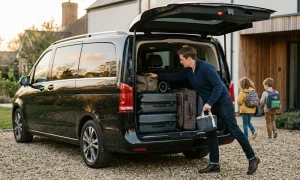
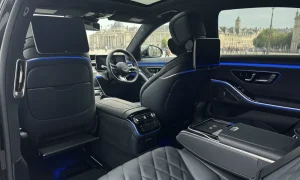
National Executive Transfers runs chauffeur transfers to Birmingham Airport, Heathrow, Manchester, Gatwick, East Midlands and beyond. Your flight gets tracked, and your price stays fixed before you travel. A Mercedes E-Class comfortably suits a solo traveller with a cabin bag and a checked case. A Mercedes V-Class gives a family or group room for everyone’s luggage without a squeeze. Our airport transfer checklist covers everything else worth sorting before you leave.
Book online in a couple of minutes, or call the team directly to talk through your route.
Frequently Asked Questions
There isn't a single one. Free underseat bags generally sit around 40 x 30 x 20cm. A bigger cabin bag, included or paid for depending on the airline, usually runs closer to 55-56 x 40-45 x 20-25cm.
A personal item is the smaller of the two and fits under the seat in front of you, things like a handbag or laptop bag. A cabin bag is the larger case for the overhead locker. Some airlines include both free; others charge for the bigger one.
It depends entirely on your airline and fare type. Ryanair and Wizz Air include only the small underseat bag for free. Jet2 and British Airways include a full cabin bag and a personal item on every single fare, no add-on required.
Ryanair's free bag is 40 x 30 x 20cm with no weight limit attached. easyJet's is bigger, at 45 x 36 x 20cm, but carries a 15kg cap. Both airlines charge extra for a larger overhead-locker bag on top.
Usually not a bigger single bag, but often extra bags or a higher combined weight. Qatar Airways' Business and First cabins get two bags at 15kg combined, against Economy's one bag at 7kg, for instance.
It gets checked into the hold. On budget airlines, that's usually the most expensive way to check a bag, often £50 to £70 or more. Full-service airlines sometimes do this free on a full flight.
Most UK airlines add a separate, small baby bag allowance alongside the adult's own hand luggage, plus free carriage for equipment like a car seat or pushchair. The details vary by airline, so check at booking.
The airline actually operating each leg of your journey, not the airline named on your overall ticket. This can mean two different limits across a single trip, so check both operating airlines separately before you fly.