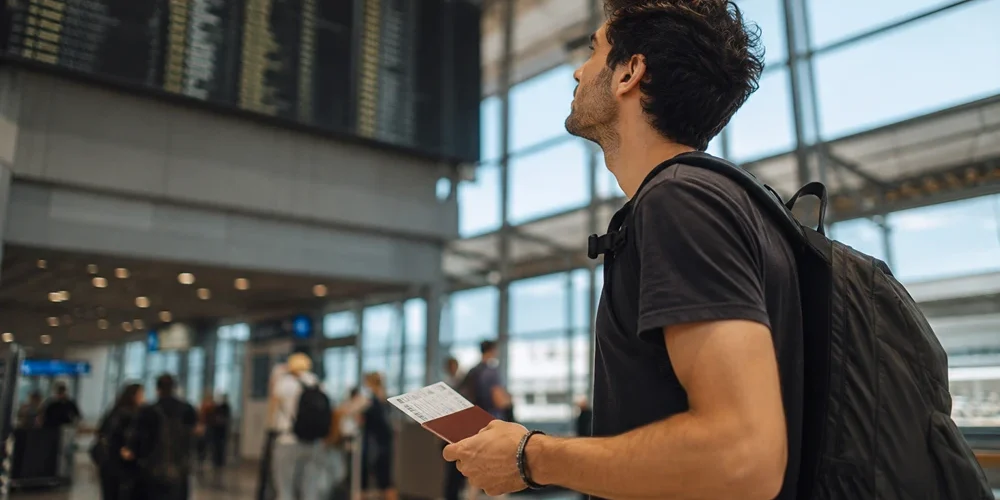
Flying for the first time feels like a bigger deal than it actually is. Most of the nerves come from not knowing what happens next, not from anything genuinely difficult. Once you have done it once, the whole process becomes second nature.
This guide walks through exactly what to expect, from the moment you book your flight to the moment you land, in the order it actually happens. No jargon, no assumed knowledge, just a clear walk-through written for someone who has never done this before.
Before You Even Get to the Airport
Check Your Passport
Your passport needs to be valid for your trip, and for many destinations it needs more than just “not expired.” Many countries outside Europe require at least six months of validity remaining from your date of travel, so check the exact requirement for where you are going well before you book anything.
Check If You Need an ETA or Visa
If you are a foreign visitor flying into the UK, or a British passport holder travelling to certain destinations, you may need an Electronic Travel Authorisation or a visa arranged in advance. Rules differ by nationality and destination, so confirm this early. Our guide on the UK ETA explained covers what visitors need before flying into Birmingham or the wider UK, and our guide to EES for UK travellers explains the new entry checks now in place for UK passport holders travelling into the EU.
Double Check Your Booking
Confirm your departure terminal, your exact flight time, and the spelling of your name against your passport. A name that does not match exactly can cause problems at check-in. This is a genuinely common first-time mistake. It takes thirty seconds to check.
Understand Your Booking Reference and Boarding Pass
These are two different things, and first-timers often mix them up. Your booking reference, sometimes called a PNR, is a short code on your confirmation email. It proves you have a seat booked. Your boarding pass comes later, usually after check-in. It shows your seat number, gate, and boarding time. You need the boarding pass to get through security and onto the plane, not just the booking reference.
Think About Travel Insurance
Travel insurance is not compulsory, but it covers you for delays, lost luggage, and medical costs abroad. Check whether your bank card already includes some cover before buying a separate policy. If you are heading into the EU, also check whether you need a GHIC card for reduced-cost medical treatment.
What to Wear Through Security
Choose shoes you can slip off easily. Security staff may ask you to remove them, and fiddly laces slow everyone down. Wear layers rather than one thick coat. Airports run warm inside, and cabins can run cold. Keep metal to a minimum. Belts, watches, and jewellery all need removing at some airports, so simpler is faster.
Bringing Cash and Cards
Most UK airports run almost entirely on card payments now, including small purchases. You do not need to carry much cash. If you are travelling abroad, order any foreign currency in advance online rather than at the airport exchange desk, since airport rates are usually the worst available. A contactless card or phone payment covers nearly everything airside.
What to Pack: Hand Luggage and Hold Luggage
Know Your Allowance
Every airline sets its own hand luggage and hold luggage limits, and they vary more than you might expect. A budget airline might allow a small under-seat bag only, while a full-service carrier includes a larger cabin bag and a hold case as standard. Check your specific airline’s allowance before you pack, not after, since paying for extra luggage at the airport costs considerably more than adding it online in advance.
The Liquid Rules Are Genuinely Confusing Right Now
Here is something that catches out even experienced flyers in 2026, not just first-timers. The old rule limiting liquids to 100ml containers in a small clear bag is being phased out, but only at some UK airports.
Heathrow, Gatwick, Edinburgh, and Birmingham now allow liquids in containers up to 2 litres, kept inside your normal hand luggage with no separate bag needed, thanks to new CT scanners. Manchester, Stansted, Luton, Liverpool, Newcastle, and Glasgow still enforce the traditional 100ml rule, with everything in a small clear bag.
This matters even more on the way home. A bottle bought at Heathrow under the new rule might not be allowed through security at a 100ml airport on your return leg, or at a connecting airport partway through your trip. Always check the specific rule for both your departure and return airports rather than assuming the same limit applies throughout your journey. Our full guide on UK liquids rules covers every airport in detail.
What You Cannot Bring
Sharp objects, most tools, and certain sports equipment need to go in hold luggage rather than hand luggage. Some items, such as certain lithium batteries and large power banks, have specific rules around how they can be carried. If you are unsure about a specific item, check your airline’s website before you travel rather than finding out at the security tray.
Bringing Your Own Food and Water
You can bring solid food through security at any UK airport. Sandwiches, snacks, and fruit are all fine. Liquids and gels follow the rules above, so a full bottle of juice needs to meet your airport’s specific limit. The easy fix is to bring an empty bottle and fill it up after security. Most UK airports have free water points airside now, which saves you paying inflated prices for a drink once you are through.
Staying Connected: Phone and WiFi
Most UK airports offer free WiFi throughout the terminal. Connect as soon as you arrive rather than relying on mobile data, which can be patchy in some terminal buildings. If you are travelling abroad, check your phone plan’s roaming allowance before you fly. Many UK networks include free roaming in the EU, but this varies by provider and by destination, so confirm it rather than assume it.
How Early Should You Arrive
As a general rule, arrive two hours before departure for a short-haul European flight and three hours for long-haul, though this varies by airline and airport, and peak periods need extra time built in. Every major UK airport has its own specific guidance, and our detailed airport guides cover the real numbers for Heathrow, Gatwick, Manchester, Birmingham, and Luton, so check the one relevant to your trip.
Arriving with time to spare matters more on your first flight than it will on your hundredth. You will move more slowly through each step simply because everything is new, and that extra buffer removes the pressure to rush through unfamiliar processes.
Getting to the Airport
Work out your route before travel day, not on the morning itself. Trains, coaches, and driving all work, but each comes with its own timing risks, from delayed services to unpredictable traffic and parking searches. Our airport transfer checklist covers everything worth planning before you leave home.
For a first flight especially, a pre-booked chauffeur removes a genuine source of stress. You do not need to work out parking, navigate an unfamiliar drop-off system, or watch the clock on public transport. Your driver knows exactly where to take you and handles the journey while you focus on everything else that is new about the day.
Check-In and Bag Drop
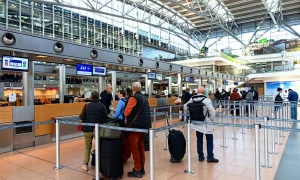
Most airlines let you check in online, usually from 24 to 48 hours before departure, which generates your boarding pass on your phone or lets you print it at home. If you are only travelling with hand luggage, online check-in often means you can walk straight to security without queuing at a desk at all.
If you have hold luggage, you still need to visit a bag drop desk or self-service kiosk to check it in, even with online check-in completed. Bag drop deadlines are strict, typically closing 40 to 60 minutes before departure depending on the airline, so do not assume online check-in removes this step entirely.
If You Need Extra Support
If you have a disability, a hidden condition, or simply feel anxious about flying, you can request special assistance. Book this through your airline, ideally at least 48 hours before your flight. Staff can help with mobility, guide you through the terminal, or simply give you extra time and support at each stage. There is no need to manage a difficult day alone if help is available.
Going Through Security
This is the part that makes most first-time flyers nervous, and it is genuinely the most straightforward once you know the routine.
You will place your hand luggage, along with your coat, belt, and any bulky items, into trays to pass through the scanner. Depending on your specific airport’s technology, laptops and liquids either stay in your bag or need removing separately, as covered in the liquids section above. Walk through the body scanner when directed, and collect your belongings on the other side.
Keep your boarding pass and passport easily accessible throughout this process, since you will need to show them more than once. Our UK airport security rules guide covers the full process in more depth if you want to prepare thoroughly.
After Security: What There Is to Do
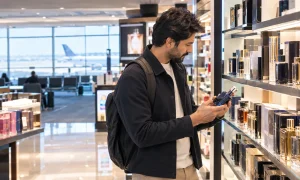
Once through security, you are airside, and the rest of the terminal opens up. Duty free shops, restaurants, and lounges all sit in this area. If you have time to spare, a paid lounge gives you a quiet, comfortable space away from the crowds, and many are open to any passenger regardless of ticket type, not just business class travellers.
Finding Your Gate
Your gate number usually appears on the departure screens around 45 minutes to an hour before your flight, not before. Watch these screens rather than assuming your gate will stay the same as shown at check-in.
Important detail for first-timers: several major UK airports, including Gatwick and parts of Manchester, do not make boarding announcements over a tannoy at all. Your gate and boarding status appear on screen only, so check them periodically rather than waiting to hear your flight called.
Boarding the Aircraft
Boarding usually starts 30 to 40 minutes before departure and often happens in groups, sometimes based on your seat location, sometimes based on your fare type. Listen for your group to be called, or watch the gate screen if there are no announcements, and join the queue when it is your turn rather than crowding the gate area early.
Have your boarding pass and passport ready as you approach the gate, since staff will check both before you walk down to the aircraft.
On the Flight
Cabin crew will run through a safety demonstration before takeoff. Pay attention even if you feel like you already understand the basics, since exits and safety equipment vary by aircraft. Keep your seatbelt fastened whenever the sign is illuminated, and follow crew instructions during takeoff and landing specifically, since this is when most airline rules apply most strictly.
If Your Trip Has a Connecting Flight
Some first trips involve two flights rather than one direct route. If you have a connection, check whether you need to collect your bags and re-check them, or whether they transfer automatically. This depends on your airline and route, so confirm it at check-in if you are unsure. Also check whether your connecting flight leaves from the same terminal. If not, build in extra time to move between them.
What If Your Flight Is Delayed or Cancelled
Delays happen, and they are not something to panic about. Watch the departure screens for updates, and listen for messages from your airline by email or app if you have one installed. You have legal rights around compensation and assistance for delays and cancellations under UK law, and our guide to flight delays and your rights explains exactly what you are entitled to and what steps to take.
Arriving at Your Destination
After landing, follow signs for arrivals, which will lead you through passport control first. If you are eligible, automated eGates offer a faster route through for biometric passport holders from a growing list of countries. Otherwise, staffed desks handle passport checks manually.
After passport control, follow signs to baggage reclaim, where a screen shows which carousel serves your flight. Once you have your bags, you pass through customs, choosing the green channel if you have nothing to declare or the red channel if you do. Most passengers use the green channel without any issue.
Common First-Time Mistakes
Not checking passport validity properly. Many destinations require six months of remaining validity, not just “not expired yet.”
Assuming online check-in removes the need for bag drop. It does not, if you have hold luggage.
Packing liquids for the wrong airport’s rules. Check both your departure and return airport specifically.
Waiting to hear a boarding announcement. Several major airports do not make any. Watch the screens.
Arriving right at the “recommended” time rather than with a buffer. Everything takes longer when it is unfamiliar. Build in extra time on your first trip specifically.
Forgetting to check the airline’s specific baggage allowance. It varies significantly between airlines, and excess baggage charges at the airport cost far more than paying in advance online.
A Simple Checklist to Follow
Check your passport validity against your destination’s specific requirement. Confirm whether you need an ETA or visa. Check in online once it opens. Check your airline’s baggage allowance and pack accordingly. Confirm your departure airport’s liquid rule. Book special assistance if you need it, at least 48 hours ahead. Plan your journey to the airport with a proper time buffer. Bring an empty water bottle to fill after security. Arrive with enough time to move through each step without rushing. Watch the departure screens rather than waiting for an announcement. Keep your passport and boarding pass accessible throughout.
Getting to the Airport Without the Extra Stress
Your first flight already involves enough new things to think about. The journey to the airport does not need to be one of them.
A pre-booked chauffeur means you know exactly when you are being collected, exactly where you are being dropped off, and exactly what the journey will cost, all confirmed before the day arrives. There is no parking to find, no unfamiliar drop-off charge to navigate, and no last-minute panic about whether you have left enough time.
Our airport transfer service covers Heathrow, Birmingham, Manchester, Gatwick, and other major UK airports, with drivers who know the terminal layouts and drop-off points properly.
Travel with National Executive Transfers
Flying for the first time should feel exciting, not overwhelming. Most of what makes it feel daunting is simply not knowing what happens next, and now you do.
At National Executive Transfers, we have run executive airport transfers since 2009. Professional, fully licensed chauffeurs collect you from your door at a confirmed time, handle your luggage, and take you directly to the correct terminal at a fixed price agreed before you travel. For a first flight especially, having one part of the day completely sorted in advance makes everything else easier to handle.
Book your airport transfer and start your first flight with one less thing to worry about.
Related articles:
- Airport Transfer Checklist: Your Guide to Smooth Arrivals and Departures
- UK Liquids Rules: Everything You Need to Know Before Flying
- UK Airport Security Rules
- What Documents Do You Need Before Your Airport Transfer in 2026
Frequently Asked Questions
Two hours before a short-haul flight and three hours before long-haul, as a general guide, though this varies by airline and airport. Build in extra time on a first flight since everything takes longer when it is unfamiliar.
Usually not. Most airlines accept a digital boarding pass on your phone, generated when you check in online. Some do still offer printing at the airport if you prefer a paper copy.
It depends on the airport. Heathrow, Gatwick, Edinburgh, and Birmingham allow up to 2 litres in containers kept in your normal hand luggage. Manchester, Stansted, Luton, and several others still enforce the traditional 100ml rule with a clear bag. Always check both your departure and return airport.
Not always. Several major UK airports, including Gatwick, do not make boarding announcements at all. Check the departure screens regularly instead.
In most cases, your bag will not travel with you, and depending on the airline, you may be refused check-in entirely. Bag drop deadlines are strict and typically close 40 to 60 minutes before departure.
Only if your departure airport allows it under the newer 2 litre rule. At airports still enforcing 100ml, anything larger needs to go in hold luggage instead.
Arrive with extra time, read through what to expect in advance, and remember that every process at the airport is designed to be followed by first-time flyers every single day. Staff are used to helping people through it.