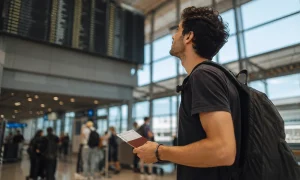
You land at 6.40am, having barely slept on an eight-hour flight. Your meeting is at 11. Somewhere in a different time zone, your body still thinks it’s midnight. You’re standing in an unfamiliar terminal. Do you take the train, find a taxi, or just start walking in the direction that feels roughly right?
This is the exact position a lot of overseas business visitors find themselves in on their first trip to Birmingham. Nobody at home briefed you on which station connects to which. You don’t know whether the meeting address is actually in the city centre, or how long the drive really takes once you’re on the ground. This guide walks through that first day properly, in order, so you’re not making decisions on the fly while running on no sleep.
Search interest around first time visiting UK Birmingham business trips tends to focus on getting the basics right, and that’s the right instinct. The biggest risk on day one usually isn’t getting lost. It’s losing an hour or two to small, avoidable friction before you’ve even reached your hotel.
What should you actually do in the first hour after landing?
Clear immigration and baggage first, and don’t rush this part. If you’re arriving on a non-visa passport, you’ll need a valid UK Electronic Travel Authorisation arranged before you flew. This isn’t something you can sort out at the border. Our guide to the UK ETA covers who needs one and how the application works.
Immigration and baggage reclaim
Birmingham Airport’s arrivals process is generally straightforward. Expect longer queues at busier times of day, particularly early morning arrivals when several long-haul flights land close together. Once through passport control, baggage reclaim is well signposted. Carousel allocation can shift close to landing, so keep an eye on the boards rather than heading straight to the one shown at check-in.
Check your phone before you leave the terminal
Sort out mobile data before you’re standing outside trying to book a taxi with no signal. Most UK networks offer short-term visitor plans, and many international plans now include UK roaming. Confirm this before you fly rather than discovering a data gap the moment you land.
Sort out payment before you need it
Contactless card payment covers almost everything in the UK now, including trains, taxis, and most retail chauffeur bookings. There’s little need to carry significant cash. It’s still worth having a small amount for the rare situation where a card reader is down or a smaller local business only takes cash. Check with your card provider about foreign transaction fees before you travel, since these vary widely and can add up over a longer trip.
Power and charging
The UK uses a three-pin plug type, different from most of continental Europe, North America, and much of Asia. Pack a suitable adapter before you fly rather than hoping the hotel has a spare. Most business hotels stock a handful, but relying on that isn’t a safe bet, especially if your phone is your main way of managing meeting details on the day.
Confirm your meeting address properly
Birmingham has more than one place that sounds similar to a visitor unfamiliar with the city. Colmore Row is not the same as Colmore Business District’s outer streets. The NEC is not in the city centre at all, despite sharing the Birmingham name. Check the exact postcode of your first meeting now, while you have time to think, rather than at the taxi rank.
Decide your transport before you’re outside
This is the point where most of the friction in a first Birmingham trip actually happens. Arrivals halls are disorientating after a long flight, and it’s tempting to just join whichever queue looks shortest. A few minutes deciding properly, covered in the next section, saves considerably more time later.
If your flight is delayed
Long-haul delays happen more often than travellers expect, and it’s worth thinking about this before you fly rather than mid-panic at the gate. If you’ve pre-booked a transfer, a reputable provider tracks your flight and adjusts the pickup automatically, so a delay doesn’t turn into a missed connection. If you’re relying on a taxi or the train, message whoever you’re meeting as soon as you know your revised landing time, rather than waiting until you’re already running late to say anything.
How do you get from Birmingham Airport into the city?
Birmingham Airport sits around ten miles from the city centre. You have three realistic options, each suited to a different situation.
The train
Birmingham International station sits directly next to the terminal, connected by a short walkway and a monorail-style link known as the Air-Rail Link. Trains run frequently to Birmingham New Street, and the journey takes roughly 10 to 15 minutes. This is genuinely the fastest and cheapest option for a visitor travelling light. It suits anyone staying centrally and confident finding their way through an unfamiliar station with luggage.
The catch is luggage and unfamiliarity together. Dragging a suitcase through an unfamiliar station, then working out which platform, adds friction. Finding a taxi at New Street on the other end adds more. This is the kind of friction a jet-lagged first-timer may not want to deal with. New Street itself is a large, busy station. Locating the correct exit for your hotel direction takes a moment if you’ve never been there before.
The taxi
Taxis and ride-hailing apps operate widely at Birmingham Airport, with a designated rank outside the terminal. This works well if you’re travelling light and don’t mind queuing, particularly at busier arrival times. Pricing isn’t fixed in advance, and drivers vary in how well they know less common business addresses outside the city centre. During peak arrival periods, expect a genuine wait at the rank rather than an immediate pickup.
Hire car
Self-drive is an option if your itinerary genuinely requires it, though it suits return visitors more than first-timers. Birmingham’s inner ring road includes a Clean Air Zone, which charges older, non-compliant vehicles. The one-way system around the centre also takes some getting used to on a first visit. Parking in the business districts adds cost and time most visitors don’t factor in upfront.
The chauffeur or pre-booked transfer
A pre-booked transfer means a driver meets you inside arrivals, already knows your meeting address, and takes you directly there. There’s no queue and no fare negotiation. Typical example, based on figures NET itself publishes elsewhere on the site: a pre-booked executive transfer for a solo traveller commonly runs somewhere in the £30 to £50 range. The exact figure varies by route, vehicle, and time of day, and it’s usually more than a train ticket. It can sit close to or above a standard taxi fare depending on demand.
The genuine advantage isn’t price. It’s certainty. There’s no queue, no fare surprise, and a driver who already knows exactly where you’re going. That includes addresses a standard taxi driver might need directions for.
Is a chauffeur worth it for a first business trip to Birmingham?
Not automatically, and it’s worth being honest about that rather than assuming the answer is always yes.
When the train or a taxi genuinely makes more sense
If you’re travelling light and staying in the city centre, with a comfortable gap before your first meeting, the train is hard to beat on cost and speed. A taxi works fine too, provided you’re not carrying much. It also works if you’re not on a tight schedule where a queue would actually cause a problem. Plenty of experienced business travellers do exactly this on every Birmingham trip without issue.
When a pre-booked transfer earns its cost
The calculation changes with a few specific situations: an early meeting straight off a long-haul flight, more than one bag, or an unfamiliar address outside the centre. It also changes with a schedule involving several stops in one day rather than a single journey. In these situations, the time and certainty a pre-booked transfer buys you is usually worth more than the modest cost difference over a taxi.
Multiple meetings in one day
If your itinerary has you moving between two or three locations, hourly hire keeps the same driver and vehicle with you throughout. A typical example is a morning meeting in Colmore Business District followed by an afternoon session further out. This removes the need to find fresh transport for every leg, which matters more than it sounds once you’re tired and running slightly behind schedule.
A genuinely honest middle ground
If your only concern is cost, and your schedule has slack, don’t feel pressured into a chauffeur for the sake of it. If your first meeting matters and you can’t afford to be late, that’s a different calculation entirely. A queue or a driver who doesn’t know the address becomes a real risk rather than a minor inconvenience.
If your day includes an early arrival followed by back-to-back meetings, it’s worth arranging the transport before you fly. Working it out after landing wastes time you don’t have. Comparing options in advance, once, takes less time than solving each leg of the day individually once you’re already jet-lagged.
What does a realistic first 24 hours actually look like?
Here’s a genuinely useful shape for the day, not a rigid script. Adjust the timings to your actual flight and meeting schedule.
Landing to hotel
Budget 45 minutes to an hour from stepping off the plane to actually leaving the terminal, covering immigration, baggage, and finding your transport. Add the journey time itself, roughly 10 to 20 minutes by train or taxi depending on traffic and your exact destination. On a very early flight, build in a little extra, since immigration queues can move slowly before staff numbers ramp up for the day.
Checking in and a proper break
Most UK hotels allow check-in from early-to-mid afternoon, though many will hold bags earlier if your room isn’t ready. Even 20 minutes to wash up and change clothes makes a genuine difference to how you feel walking into a meeting after a long flight. If your room isn’t ready and your meeting is close by, ask the hotel to store your luggage rather than carrying it to the meeting itself.
The first meeting
Build in more buffer than you think you need for your first meeting in an unfamiliar city. Ten minutes early beats five minutes late, and Birmingham’s city centre streets aren’t always obvious on a map versus in person.
A note on UK business norms
Punctuality is taken seriously in UK business culture, and arriving even a few minutes late without warning tends to land worse than it might elsewhere. A firm handshake and first names are standard once introductions are made, though it’s fine to follow the lead of whoever you’re meeting if you’re unsure. Small talk before getting to business, often about the journey or the weather, is normal rather than a delay tactic. If something changes and you’re going to be late, a quick message ahead of time is expected and generally well received.
Lunch and the afternoon
A short, simple lunch works better than a long one on your first day, particularly with jet lag still working against you. Save the more considered meal for the evening, when you’re not also trying to stay alert for a second meeting. If you have a gap between meetings, resist the temptation to fill it with sightseeing. A short rest usually pays off more.
The second meeting or appointment
If your day includes a second meeting, factor in the time to actually get there, not just the meeting length itself. Birmingham’s business districts sit reasonably close together. Moving between them still takes real minutes, especially with luggage still in tow if you haven’t reached your hotel yet.
The evening
Whether this is a client dinner or a quiet evening alone depends entirely on your itinerary. Either way, resist the urge to push through and explore extensively on day one. A slightly earlier night sets up day two far better than an ambitious first evening does. Jet lag tends to hit hardest in the mid-afternoon slump and again in the early evening. Plan lighter commitments around those windows if you can.
The next morning
Confirm your next day’s transport the night before, not over breakfast. If tomorrow includes another airport journey, another city, or an early start, sort this the night before. Knowing exactly how you’re getting there removes one more thing to think about while you’re still adjusting to the time difference.
Why does it matter where your meetings actually are?
Birmingham’s business activity isn’t evenly spread across the city, and where your meetings fall changes your whole transport plan.
Colmore Business District
Colmore Business District, centred on Colmore Row, is Birmingham’s financial and professional core. Law firms, banks, and corporate offices cluster here, largely walkable, close to both Snow Hill and New Street stations. If most of your meetings are here, you may barely need transport once you’ve arrived, beyond the initial airport journey.
The NEC
The National Exhibition Centre sits next to Birmingham Airport, not in the city centre. If your trip is built around the NEC, staying centrally and commuting out each day adds real time you might not want to spend. Our complete NEC guide covers this in more depth. Many visitors attending exhibitions or trade shows choose a hotel closer to the airport specifically to avoid this daily commute.
Elsewhere in the city
Brindleyplace, the Mailbox, and areas further out like Edgbaston or Solihull each sit at slightly different distances from the centre. If your itinerary spans more than one of these areas in a single day, a single pre-booked vehicle solves this cleanly. It stays with you and removes the need to work out separate transport for each leg. This matters particularly on a first visit, when you don’t yet have a feel for how long each journey genuinely takes.
What should you know about lunch, dinner and jet lag on day one?
Food matters more on day one than people expect, mostly because of how it interacts with jet lag.
Timing over ambition
Eating on UK meal times, rather than the meal times your body still thinks it’s on, genuinely helps reset your internal clock faster. A modest lunch around midday and dinner in the early evening does more for you than an elaborate meal at an odd hour. Caffeine works the same way. A coffee mid-morning helps; one at 9pm just delays the adjustment further.
Daylight exposure matters more than most travellers realise for shaking off jet lag quickly. A short walk outside during a break, even just to the next meeting rather than by taxi, genuinely helps reset your body clock faster than staying indoors under artificial light all day.
Business lunch practicalities
If lunch is part of a meeting, central Birmingham has plenty of straightforward options near Colmore Business District and New Street. You don’t need to venture far or book weeks ahead for a first-day working lunch. Most venues in this area are used to business diners and can seat a small group without much notice on a weekday.
Client dinner or your own evening
If you’re hosting or attending a client dinner, Birmingham’s dining scene genuinely surprises most first-time visitors. That includes a strong Michelin-starred presence and the well-known Balti Triangle for something more distinctly local. Our broader Birmingham business travel guide covers specific restaurant recommendations if you want to plan ahead. Book a few days in advance where you can, particularly during busy exhibition or conference weeks when the better-known venues fill up quickly.
Dietary requirements
Flag any dietary requirements when booking a client dinner, not on arrival at the restaurant. This is a small detail that matters more in an unfamiliar country where you can’t easily judge a menu at a glance.
Tipping
Tipping norms in the UK are lighter than many visitors expect. Around 10 to 12.5% is standard at a sit-down restaurant. Many venues now add a service charge automatically, so check the bill before adding more on top. Tipping taxi and chauffeur drivers isn’t obligatory. Rounding up, or a small amount for good service, is appreciated rather than expected. This differs enough from some other countries that it’s worth knowing before your first dinner rather than guessing at the table.
What should you check before you fly?
A handful of checks before departure prevent most of the friction visitors run into on day one.
Documents and entry requirements
Confirm your passport has enough validity remaining, and check whether you need a UK Electronic Travel Authorisation based on your nationality. This must be arranged before you travel; it isn’t something available at the airport on arrival. GOV.UK’s own guidance is the most reliable place to confirm current requirements for your specific passport.
Weather and clothing
Birmingham’s climate is mild but genuinely unpredictable. Summers rarely get very hot, winters rarely get extremely cold, but rain is common across most of the year. Pack for changeable weather rather than assuming the season alone tells you what to bring. A light layer and a compact umbrella cover most scenarios, even in what looks like a dry forecast.
Meeting addresses and contacts
Save exact addresses, postcodes, and a contact number for each meeting somewhere accessible offline. Don’t rely solely on an email you might not have signal to open. A short note in your phone, or even a printed page, removes the risk of a data gap costing you time.
Transport booked in advance
If you’re arranging a pre-booked transfer, book it before you fly rather than after landing. This avoids arriving to find the counter or app you’d planned to use isn’t straightforward from where you actually are in the terminal. Confirming your flight number at booking also means the company can adjust automatically if your arrival time shifts.
Things to consider before you travel
- Whether your nationality requires a UK ETA, and whether it’s been arranged
- Your exact first meeting address and postcode
- Which station or transport option suits your luggage and schedule
- Hotel location relative to your meetings, particularly if they’re in more than one district
- Weather-appropriate clothing for a changeable UK climate
- Mobile data sorted before you land, not after
Where does a chauffeur fit, and how do you prepare for tomorrow?
National Executive Transfers is based at Birmingham Airport, which puts it in a straightforward position for exactly this kind of first-arrival journey. A driver can meet you inside arrivals, already briefed on your destination, so there’s no queue and no explaining an unfamiliar address from scratch.
The fleet includes the Mercedes E-Class for a solo traveller or pair, and the Mercedes S-Class for a more senior arrival. For a small group or extra luggage, there’s the Mercedes V-Class. Hourly and full-day hire is also available, which suits a first day involving more than one meeting across different parts of the city. The same driver and vehicle can move with you rather than starting each leg from scratch.
Flight tracking and meet and greet
Flight monitoring and meet-and-greet come as standard on airport transfers, which matters more on a first visit than almost any other type of journey. A delayed long-haul flight shouldn’t mean explaining yourself to a driver who was expecting you two hours earlier. Corporate travel and business chauffeur bookings can also be arranged for return visits or a series of meetings across the same trip.
What to tell your driver when booking
Give your flight number so the journey can be tracked against any delay. Include your exact first destination, how much luggage you’re carrying, and whether your day includes more than one stop. The more specific the booking, the less you need to explain once you’ve actually landed.
Preparing for day two
Before you go to bed on day one, confirm tomorrow’s schedule and transport, not just the meeting time. If day two involves a different part of the city, a return to the airport, or an early start, sort this the night before. Having it settled removes one more variable while you’re still adjusting.
Not every visitor needs a chauffeur for a Birmingham trip. The train genuinely suits plenty of straightforward, city-centre-only visits. A pre-booked transfer earns its cost in a specific combination most overseas business visitors actually face on day one: unfamiliarity, luggage, jet lag, and a schedule with no room for a queue to go wrong. This is especially true for first time visiting UK Birmingham business trips, where the schedule usually leaves little margin for error. If your first trip to Birmingham fits that description, book your transport before you fly rather than figuring it out after you land. You can start by arranging your Birmingham Airport transfer directly.
Frequently Asked Questions
It depends on your nationality. Many visitors don't need a full visa for a short business trip but do need a UK Electronic Travel Authorisation, arranged online before travel. Check the current requirements for your passport well before you fly.
The train from Birmingham International station takes roughly 10 to 15 minutes to New Street and runs frequently. Taxis and pre-booked transfers are also widely available, both taking a similar amount of time depending on traffic.
The NEC sits directly next to Birmingham Airport, within a few minutes by road or a short walk with light luggage. This is a different location entirely from the city centre.
It depends on your schedule and luggage. For one straightforward city-centre meeting with time to spare, a taxi or train usually does the job. For an early arrival, tight timing, or several stops in one day, a pre-booked transfer removes a genuine source of stress.
Staying centrally, within walking distance of Colmore Row, Snow Hill, or New Street, generally works well if most of your meetings are in the financial district. Our Birmingham business travel guide covers specific hotel options.
Taxi fares vary by demand and aren't fixed in advance. A pre-booked chauffeur transfer typically runs in the £30 to £50 range for a solo traveller, though the exact price depends on route, vehicle, and timing.
It's manageable, but a jet-lagged first-time visitor with multiple bags often finds a taxi or pre-booked transfer considerably less stressful than navigating an unfamiliar station.
Your flight number, exact destination, how much luggage you have, and whether your day includes more than one stop. This lets the company send the right vehicle and track any delay properly.
Build in more buffer than usual on your first visit. Unfamiliar streets, an unfamiliar station, and general travel fatigue all eat into time you'd normally have to spare.
The city centre itself is compact and largely walkable between the main business districts. Getting there from the airport, and getting to venues outside the centre like the NEC, is where most planning actually matters.