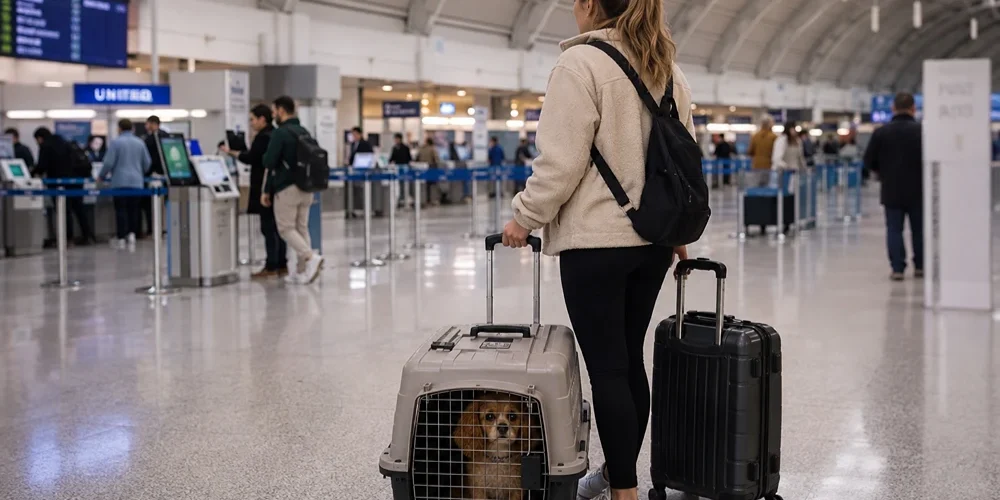
Most people assume that flying with a pet works roughly the same as flying with a suitcase. Book a spot, turn up, check in, done. The reality at UK airports is quite different. It catches a genuinely large number of pet owners off guard every year.
The rules cover two separate things that often get confused with each other. First, the legal health requirements your pet needs to enter or leave the country, known as the Pet Travel Scheme. Second, whether your actual airline will let a pet on the aircraft at all. This second point turns out to be a much bigger sticking point than most people expect.
This guide walks through both, in plain English, with the current 2026 rules that changed significantly this year.
What the Pet Travel Scheme Actually Covers
The Pet Travel Scheme, usually shortened to PETS, is the UK’s framework for letting dogs, cats, and ferrets travel between Great Britain and other countries without going into quarantine. Keeping rabies out of the country is the whole point, and every requirement in the scheme traces back to that one goal.
Your airline does not run this scheme. The government enforces it, specifically DEFRA. Your airline simply checks that you have met it before they will carry your pet. Get the paperwork wrong, and the airline has no discretion to let you fly anyway.
The Four Things Every Pet Needs
Whatever country you are travelling to or from, four requirements sit at the core of pet travel. They need to happen in a specific order.
1. A Microchip
Your pet needs an ISO 11784 or 11785 compliant microchip. Your vet must implant it before the rabies vaccination, not after. This detail catches more people out than almost anything else in the whole process. If your vet vaccinates first and chips second, the vaccination does not count, and you start the waiting period again from scratch.
2. Rabies Vaccination
The vaccination must happen after the microchip and needs at least 21 full days to pass before you travel. This is not negotiable, and there is no way to speed it up. If your pet’s rabies cover has lapsed at any point, the 21 day clock restarts from the new vaccination date. Keeping boosters current genuinely matters if you travel more than once a year.
3. Tapeworm Treatment, Dogs Only
Some countries require tapeworm treatment for dogs, including Great Britain, Northern Ireland, Ireland, Finland, Norway, and Malta. A vet must give the treatment between 24 hours and 5 days before arrival. The window matters both ways. Arrive too soon after treatment and you will be turned away. Arrive more than five days after and the treatment counts as expired, meaning you need it done again before you can enter.
Cats and ferrets do not need this step. It applies to dogs only.
4. An Animal Health Certificate
This is the document that ties everything together. It is where the biggest change for 2026 sits.
The Big Change: Pet Passports No Longer Work
Since 22 April 2026, pet passports issued in Great Britain stopped being valid for travel to the EU entirely. If your dog or cat has an old GB pet passport sitting in a drawer, it will not get them into Europe anymore, no matter how recently it was stamped.
In its place, you now need an Animal Health Certificate, commonly shortened to AHC, issued by an official vet for every single trip. Book it no more than 10 days before you travel. Once issued, it stays valid for onward travel between EU countries for up to six months, following an update to the rules from 22 April 2026. So if you are visiting France in July and then driving on to Spain in September within that window, one certificate covers the whole trip, provided the tapeworm and other requirements stay current along the way.
One important note if you are an EU resident with an EU-issued pet passport, or if you hold a Northern Ireland pet passport. These can still work for travel within Europe. Only the Great Britain-issued passport no longer applies. Do not throw an old EU passport away even if you cannot currently use it. It still holds your pet’s full vaccination history, and your vet will need to see it when preparing a new AHC.
Travelling From an Unlisted Country
Almost everything above assumes you are travelling between the UK and what the government classifies as a listed country, essentially most of Europe, the United States, Canada, Australia, and Japan. For most UK travellers, this covers the trip. If yours falls into this category, the standard microchip, vaccination, and AHC process is all you need.
Bringing a pet in from an unlisted country is different. This generally covers parts of Asia, Africa, South America, and countries such as Turkey, Russia, and Morocco, and an extra step applies. Your pet needs a rabies antibody blood test, sometimes called a titre test or RNATT, taken at least 30 days after the rabies vaccination. A mandatory three month waiting period then follows from the date the blood sample was taken, not the vaccination date, before your pet can travel.
This genuinely extends the planning timeline from the standard six weeks to closer to four or five months. If your pet is coming from further afield, start the process as early as possible rather than working backward from a booked flight date.
Travelling Between Great Britain and Northern Ireland
If your trip is purely between Great Britain and Northern Ireland, the rules are lighter. A Pet Travel Document, or PTD, covers this specific route and only requires microchipping, not rabies vaccination or tapeworm treatment.
The catch is that this document only works for the direct GB to NI journey. If your dog then travels on from Northern Ireland into the Republic of Ireland, that counts as entering the EU. You need a full Animal Health Certificate and valid rabies vaccination for that leg, regardless of the PTD.
Can Your Pet Actually Get on the Plane?
Here is the part that genuinely surprises most first-time pet travellers from the UK, and it is arguably more important than the paperwork itself. Having every document in order means nothing if your airline will not carry pets on the route you are booking.
Budget Airlines Generally Say No
Ryanair does not carry pets in the cabin or the hold, full stop. The sole exception is certified assistance dogs registered with an organisation such as Assistance Dogs UK or Assistance Dogs International. easyJet runs the same policy. If you are booking a budget short-haul flight expecting to bring a pet along, check this before you book anything else, since it will likely rule the whole route out.
British Airways Uses Cargo, Not Passenger Booking
British Airways does not accept pets in the cabin or as checked baggage on any route. Every pet, aside from a qualified assistance dog, travels as manifest cargo through IAG Cargo. This is arranged separately through a partner such as PetAir UK, rather than through the standard flight booking. This means you cannot simply add a pet to your BA booking online. The process runs entirely separately, with its own quote, paperwork, and timeline.
TUI and Others Vary by Airline
TUI allows only assistance dogs in the cabin, free of charge, with all other pets travelling in the hold. Some airlines take a different approach entirely. Vueling, for example, allows small pets in the cabin, up to a 10kg combined weight including the carrier, though it does not accept pets in the hold at all.
The pattern across UK-departing flights is genuinely inconsistent from one airline to the next, and policies have tightened further through 2026. Check directly with your specific airline for your specific route before assuming anything, including whether cabin travel is even available from your departure airport. Some carriers that allow cabin pets elsewhere in Europe have restricted or removed that option specifically for flights through London in recent months.
Assistance Dogs Are the Clear Exception
Certified assistance dogs, registered with a recognised body, generally travel free in the cabin across nearly every airline covered here, including the ones that otherwise refuse all pets. Even so, most airlines want 48 hours to 7 days advance notice. Some require pre-approval through the airport’s animal reception service before the day of travel. Book this early rather than assuming it can be sorted at check-in.
Emotional support animals sit in a different category now. Most major UK airlines treat them as standard pets rather than assistance animals, a change from a few years ago worth knowing about if you were relying on the older rules.
Breed and Temperature Restrictions
Even when a pet is accepted for hold or cargo travel, airlines commonly restrict certain breeds. This particularly affects brachycephalic, or flat-faced, breeds such as bulldogs, pugs, and Persian cats, due to breathing difficulties these breeds face at altitude and in pressurised holds. Check your specific breed against your airline’s policy before booking anything.
Cargo transport also comes with temperature limits. Many airlines automatically suspend live animal transport when ground temperatures at the departure or arrival airport exceed roughly 29°C, or fall below around 7°C, for the animal’s safety. This can affect summer and winter travel dates in ways that are easy to overlook when booking months in advance.
Carrier Requirements
Whether your pet travels in the cabin, hold, or as cargo, the carrier itself needs to meet IATA Live Animals Regulations standards for anything beyond a small in-cabin pet. Practically, this means your pet must be able to stand up fully, turn around, and lie down naturally inside the carrier without crouching. A crate that is too small, even by a small margin, faces refusal at check-in. Measure your pet properly rather than guessing.
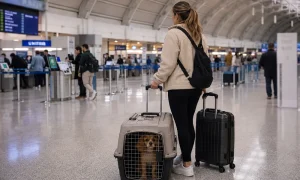
Cabin carriers, where permitted, are usually soft-sided. They need to fit fully under the seat in front of you, with exact dimensions varying by airline. Hold and cargo crates are almost always the harder plastic type, ventilated on multiple sides, with a leak-proof base and secure but not padlocked doors, since staff need to be able to open them if required.
A Word on Sedation
The instinct to sedate a nervous pet before a flight is common, but most vets actively advise against it, and this is worth flagging directly. Sedatives can affect an animal’s breathing and blood pressure in ways that become genuinely dangerous at altitude and in a pressurised, unfamiliar cargo hold, where staff cannot monitor your pet the way they could at home. If your pet is a nervous traveller, speak to your vet well in advance about calming techniques or products specifically approved for travel, rather than reaching for a sedative on the morning of the flight.
Flying Is Not Your Only Option
Flying is not the only route into Europe, worth knowing given how restrictive many airlines are with pets. The Eurotunnel Pet Travel Scheme and several ferry operators carry pets in the car with you, in your own vehicle, rather than through a cargo process at all. Your pet still needs to meet exactly the same PETS requirements, microchip, rabies vaccination, and the relevant AHC or tapeworm treatment. The actual journey is far simpler, since there is no cabin, hold, or cargo distinction to navigate, and no airline pet policy to check.
Many UK pet owners heading into Europe find this route genuinely easier, particularly with a dog too large for cabin travel and an airline that will not accept the hold. Eurotunnel or a pet-friendly ferry crossing often works out cheaper than flying too, even accounting for the longer journey time. Compare both options properly before assuming a flight is the only way to get there.
Heathrow’s Animal Reception Centre
If your pet is arriving into the UK through Heathrow, it will most likely pass through the Heathrow Animal Reception Centre, located near Terminal 4 and staffed by government inspectors and veterinary officials. This facility handles the customs and health checks that confirm your paperwork matches your pet before release.
Processing time varies considerably depending on where the pet has travelled from and how complete the documentation is. This can range from around an hour to several hours in some cases. Having every document ready and easily accessible, rather than buried in a bag, genuinely speeds this process up.
What Pet Travel Actually Costs
Costs vary by vet practice and location, but here is a realistic breakdown of the individual steps for a standard trip on the Animal Health Certificate route.
Microchipping, if your pet does not already have one, typically costs £15 to £30 as a one-off charge. Rabies vaccination runs £40 to £70 per dose. The Animal Health Certificate itself is the biggest single cost, generally £100 to £300. Practices in central London and other major cities charge toward the higher end, while rural vets often cost less. The certificate itself is identical regardless of what the vet charges for issuing it, so it is genuinely worth comparing prices between a couple of practices rather than automatically booking with your usual vet. Tapeworm treatment for dogs adds a further £20 to £40.
Added together, a full round trip using the standard AHC route typically lands somewhere between £150 and £350 in vet fees alone, including a certificate for both the outbound and return journey, before any airline pet fee or cargo cost.
If you are using a professional pet relocation service to handle the whole process, budget considerably more, typically £1,000 to £3,000. This covers the cargo booking, crate, and all the paperwork, reflecting the logistics rather than just the health requirements. Always get a specific quote for your exact route rather than assuming a general figure applies.
How Far Ahead Should You Start Planning
Start preparing at least six weeks before travel, and longer if your pet’s vaccination history needs building up from scratch. The 21 day rabies waiting period alone eats into your timeline quickly. Factor in booking a vet appointment too, plus the Animal Health Certificate itself, which needs booking for a slot within 10 days of your actual travel date.
A simple order to work through:
Microchip first, if not already done. Rabies vaccination next, at least 21 days before you plan to travel. Tapeworm treatment for dogs, timed to fall within the 24 hour to 5 day window before your return to the UK. Animal Health Certificate booked with your vet within 10 days of departure. Separately, confirm your airline’s actual pet policy for your specific route as early as possible. This can rule out an entire booking regardless of how well the health paperwork is progressing.
Common Mistakes That Get Pets Turned Away
Vaccinating before microchipping. The vet must scan the chip at the time of vaccination for it to count. Get the order wrong and the whole 21 day clock restarts.
Assuming a GB pet passport still works. It does not, as of 22 April 2026, for EU travel. An Animal Health Certificate is required for every trip unless you are an EU resident.
Booking a flight before checking the airline’s pet policy. Many people arrange dates and routes first, then discover their airline does not carry pets on that route at all.
Missing the tapeworm treatment window. Too early and you are turned away. Too late and the treatment has expired. The 24 hour to 5 day window is strict on both ends.
Leaving the Animal Health Certificate until the last minute. It can only be issued within 10 days of travel. This genuinely cannot be sorted weeks in advance the way other paperwork can.
Getting to the Airport With Your Pet
Travelling with a pet through the airport itself brings its own stress, well before boarding even comes into it. Public transport is not always practical with a carrier and a nervous animal. Not every taxi driver is willing to take a pet either, particularly a larger dog.
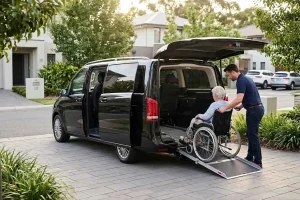
A pre-booked chauffeur removes that uncertainty. You know in advance that the vehicle, the driver, and the journey are all confirmed for a pet on board, rather than hoping a taxi turns up willing to take you. Your carrier and any last minute documents travel safely. The drive to the airport becomes one less thing to worry about on a day that already involves enough paperwork and planning.
Our airport transfer service covers journeys to Heathrow, Birmingham, Manchester, and other major UK airports. Our Heathrow Airport chauffeur service is worth mentioning specifically if your pet is arriving through the Animal Reception Centre near Terminal 4, since your pickup can be timed around the extra processing time this involves.
Travel with National Executive Transfers
Flying with a pet already involves enough moving parts: vet appointments, certificates, timing windows, and airline policies to check. The journey to the airport should not be another thing to worry about.
At National Executive Transfers, we have run executive airport transfers since 2009. Professional, fully licensed chauffeurs collect you from your door at a confirmed time, handle your luggage, and take you directly to the correct terminal at a fixed price agreed before you travel. If you are collecting a pet after it has cleared the Animal Reception Centre, we track your flight and adjust your pickup time. You will not be waiting around with an anxious animal after a long journey.
Book your airport transfer and take one genuine stress off a day that already has plenty.
Related articles:
- How Early Should You Arrive at Heathrow Airport?
- Airport Transfer Checklist: Your Guide to Smooth Arrivals and Departures
- Heathrow Airport Departure Guide
- Benefits of Hiring a Professional Chauffeur in Birmingham
Frequently Asked Questions
The UK's legal framework governing how pets move between Great Britain and other countries without quarantine, requiring a microchip, rabies vaccination, tapeworm treatment for dogs, and an Animal Health Certificate.
Not if it was issued in Great Britain. Since 22 April 2026, GB-issued pet passports no longer work for EU travel. You need an Animal Health Certificate for each trip instead, unless you are an EU resident with an EU-issued passport.
At least 21 full days before you travel. The vaccination must happen after the microchip is implanted, not before.
No. Tapeworm treatment is required for dogs only, given by a vet between 24 hours and 5 days before arrival.
You need an additional rabies antibody blood test, taken at least 30 days after vaccination, followed by a mandatory three month wait from the date the sample was taken before your pet can travel. This extends the total planning timeline to around four to five months.
Typically £100 to £300 depending on the vet practice, with city practices often charging more than rural ones. Combined with microchipping, vaccination, and tapeworm treatment where relevant, a full round trip usually costs £150 to £350 in vet fees alone.
Yes. The Eurotunnel Pet Travel Scheme and several ferry operators allow pets to travel in your own vehicle, avoiding cabin, hold, and cargo restrictions entirely. The same PETS health requirements still apply, but the journey itself is often simpler and cheaper than flying.
It depends entirely on the airline and route. Ryanair and easyJet do not accept pets at all except certified assistance dogs. British Airways requires all pets to travel as cargo. Some other airlines allow small pets in the cabin. Always check directly with your specific airline before booking.